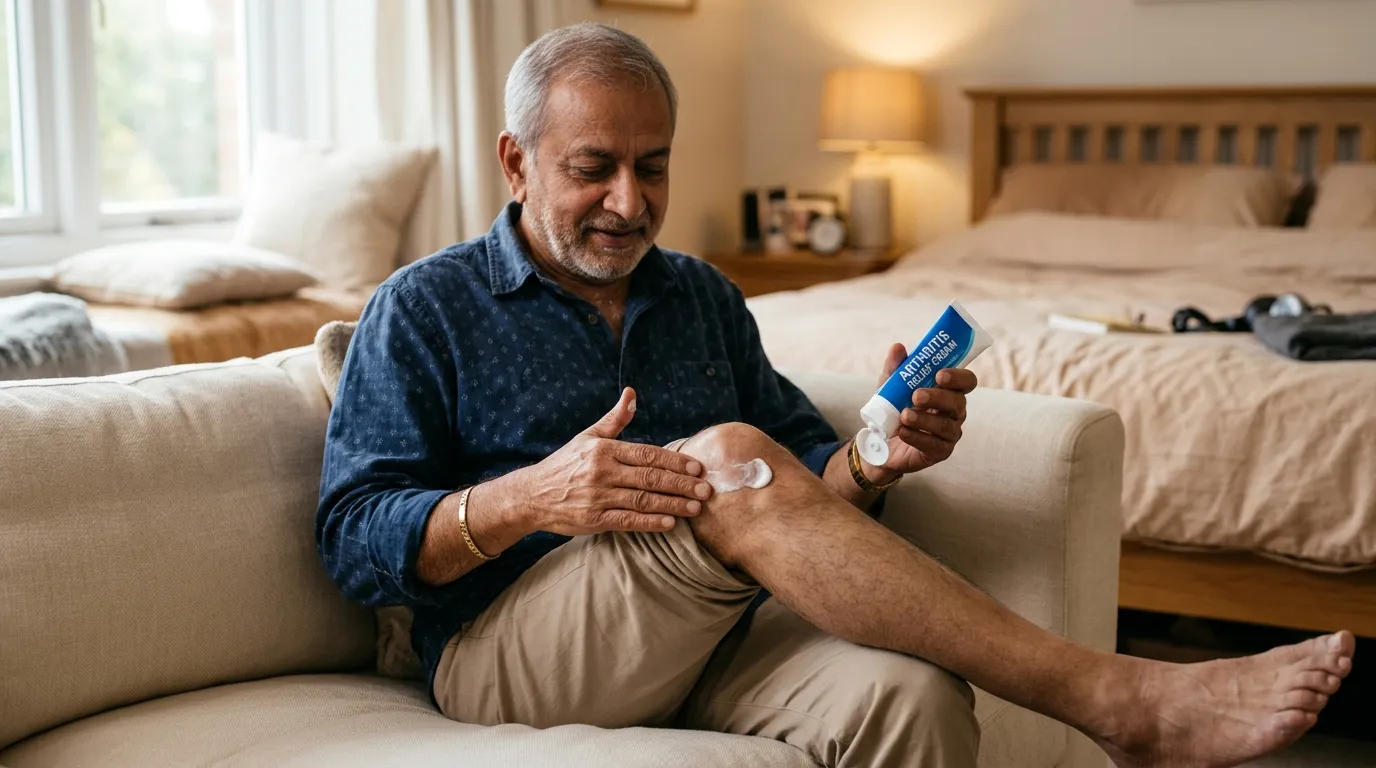
If you're over 55 and living with joint pain, you've likely reached for a topical pain reliever at some point. Two names dominate the conversation: Voltaren and Biofreeze. But these products work in fundamentally different ways, and choosing between them—or using them together—requires understanding your specific type of arthritis pain and your individual health profile.
As an orthopedic specialist and geriatric physical therapist, I've evaluated hundreds of seniors navigating this exact decision. The good news: living with joint pain is not inevitable. These solutions actually work—but only when matched to your condition and applied strategically.
This comprehensive guide breaks down the clinical evidence, safety profiles, and real-world application strategies to help you make an informed choice.
The Daily Reality: Why Topical Treatments Matter for Seniors
According to the Arthritis Foundation, over 54 million American adults have arthritis, with osteoarthritis (OA) being the most common form. For seniors, joint pain often means:
- Morning stiffness that takes 30–60 minutes to resolve
- Swelling and inflammation limiting range of motion
- Difficulty performing daily tasks: opening jars, climbing stairs, walking to the mailbox
- Concern about systemic side effects from oral pain medications
Topical treatments offer a compelling alternative because they deliver medication directly to the affected joint while minimizing systemic absorption. According to the Mayo Clinic, topical NSAIDs penetrate local joint tissue effectively while reducing the risk of gastrointestinal, cardiovascular, and renal complications associated with oral pain relievers.
Quick Comparison: Voltaren vs Biofreeze at a Glance
| Feature | Voltaren Gel | Biofreeze |
|---|---|---|
| Active Ingredient | Diclofenac Sodium 1% | Menthol 4% |
| Drug Category | Topical NSAID (OTC) | Counterirritant Analgesic (OTC) |
| Mechanism | Blocks COX enzymes; reduces inflammation | Stimulates cold receptors; blocks pain signals |
| Onset of Action | 3–7 days (cumulative) | 10–15 minutes (immediate) |
| Duration | Continuous (4x daily) | 2–4 hours per application |
| Best For | Chronic daily OA pain & swelling | Acute flare-ups & quick relief |
| Primary Risk | Cardiovascular, GI, renal (if systemic) | Skin irritation; contact dermatitis |
| CHECK PRICE | CHECK PRICE |
Deep Dive: Voltaren Gel (Diclofenac Sodium 1%)
How Voltaren Works at the Cellular Level
Voltaren is a nonsteroidal anti-inflammatory drug (NSAID) that works by inhibiting cyclooxygenase (COX) enzymes—specifically COX-1 and COX-2. These enzymes produce prostaglandins, hormone-like substances that trigger inflammation, pain, and swelling in joint tissue.
When you apply Voltaren gel to an arthritic knee, wrist, or hand, the diclofenac penetrates the skin and accumulates in the synovial fluid (the lubricating fluid inside your joint). Over 3–7 days of consistent application, the drug reaches therapeutic concentration and begins actively suppressing inflammatory signals at the source.
According to the Mayo Clinic, topical NSAIDs achieve local tissue concentrations 10 times higher than systemic blood levels, meaning your joint receives potent anti-inflammatory action while your organs absorb only about 6% of the dose compared to oral NSAIDs.
Clinical Ideal Use Cases for Seniors
Voltaren is most effective for:
- Localized osteoarthritis in superficial joints: hands, wrists, elbows, knees, ankles, and feet
- Persistent inflammatory swelling that limits daily function
- Chronic pain requiring daily management rather than occasional relief
- Seniors who cannot tolerate oral NSAIDs due to stomach sensitivity or previous GI issues
Research published in the Journal of Pain Research found that seniors applying Voltaren 4 times daily for knee osteoarthritis reported 40–50% pain reduction within 7 days, with continued improvement through week 4.
Safety Profile & Medical Precautions for Older Adults
While topical Voltaren is safer than oral NSAIDs, seniors must understand the risks:
Cardiovascular & Renal Concerns
Even though topical absorption is minimal, systemic NSAIDs can increase blood pressure and strain the kidneys—concerns that intensify with age. According to the American Academy of Orthopaedic Surgeons (AAOS), seniors with the following conditions should consult their physician before using Voltaren:
- High blood pressure (hypertension)
- Chronic kidney disease or reduced kidney function
- History of heart attack or stroke
- Congestive heart failure
- Diabetes
Drug Interactions
Voltaren can interact with:
- Oral NSAIDs (ibuprofen, naproxen, aspirin)—never combine these
- Blood thinners (Warfarin, Eliquis, Xarelto)—increases bleeding risk
- ACE inhibitors (lisinopril, enalapril)—may reduce blood pressure control
- Diuretics (furosemide)—may impair kidney function
Application Safety Rules
- Never apply to broken skin, open wounds, or areas with eczema or dermatitis
- Wash hands immediately after application (unless treating hands)
- Do not cover with bandages or heating pads—this increases systemic absorption
- Use the provided dosing card to measure the correct amount (typically 2–4 grams per application)
- Maximum daily dose: 32 grams across all affected areas
💡 Expert Tip: Before using Voltaren for more than 2 weeks, have your physician check your blood pressure and kidney function (creatinine and BUN levels). This baseline monitoring is especially important if you're over 70 or have diabetes.
Deep Dive: Biofreeze (Menthol-Based Cryotherapy)
How Biofreeze Works: The Gate Control Theory of Pain
Biofreeze operates on a completely different principle than Voltaren. Instead of reducing inflammation, it uses L-menthol (4%) to activate TRPM8 cold receptors in your skin.
Here's the mechanism: Your nervous system processes pain signals along slow-moving pathways. When you apply Biofreeze, the menthol creates an intense "cold" sensation that travels along fast-moving nerve fibers. These fast signals essentially "gate" or block the slower pain signals from reaching your brain—a phenomenon called the Gate Control Theory of Pain.
The result? You feel immediate cooling relief (within 10–15 minutes) without any anti-inflammatory action. The sensation typically lasts 2–4 hours.
Clinical Ideal Use Cases for Seniors
Biofreeze shines in these scenarios:
- Acute flare-ups requiring immediate relief before physical therapy or doctor appointments
- Morning stiffness that needs quick resolution before daily activities
- Muscle guarding and tension surrounding arthritic joints
- Seniors taking blood thinners who cannot safely use NSAIDs
- Temporary relief while waiting for Voltaren to build therapeutic levels
- Nighttime discomfort when you need drug-free pain management
Safety Profile for Older Adults
Biofreeze has an excellent safety profile for seniors:
- Non-systemic: Menthol does not enter the bloodstream in meaningful amounts
- No drug interactions: Safe to use alongside all prescription medications, blood thinners, and other topical treatments
- No organ toxicity: Cannot harm the heart, kidneys, liver, or stomach
- Minimal side effects: Primary risk is localized skin irritation or contact dermatitis in sensitive individuals
According to the National Institute of Arthritis and Musculoskeletal and Skin Diseases (NIAMS), topical counterirritants like menthol are recognized as safe, drug-free pain management modalities for older adults, particularly those with multiple comorbidities or polypharmacy concerns.
Application Precautions
- Avoid applying to broken skin, open wounds, or areas with active dermatitis
- Never apply near eyes, mucous membranes, or genitals
- Wash hands after application (unless treating hands)
- If you experience excessive burning or blistering, discontinue use and rinse with cool water
- Can be applied 3–4 times daily as needed
Head-to-Head Comparison: Voltaren vs Biofreeze for Arthritis
Speed of Relief vs Duration of Action
Winner for Speed: Biofreeze
If you wake up with a stiff knee and need to walk to the kitchen, Biofreeze delivers relief in 10–15 minutes. Voltaren requires 3–7 days of consistent application before you notice meaningful pain reduction.
Winner for Duration: Voltaren
Biofreeze's relief lasts 2–4 hours. Voltaren, applied 4 times daily, provides continuous anti-inflammatory action throughout the day and into the night.
Inflammatory Pain vs Mechanical/Nerve Discomfort
Understanding your pain type matters:
- Deep, inflammatory pain (swelling, warmth, stiffness that worsens with activity): Voltaren is superior because it addresses the root cause—inflammation.
- Surface pain, muscle tightness, or nerve-related discomfort: Biofreeze excels because it overrides pain perception and relaxes guarding muscles.
Many seniors experience both types simultaneously. Your joint may have underlying inflammation (requiring Voltaren) while surrounding muscles are tight and guarding (requiring Biofreeze relief).
Ease of Application & Daily Compliance
From a geriatric physical therapy perspective, compliance is critical. A treatment only works if you use it consistently.
Voltaren Challenges:
- Requires a dosing card to measure 2–4 grams per application
- Must be applied 4 times daily (morning, midday, evening, bedtime)
- Messy gel formulation can stain