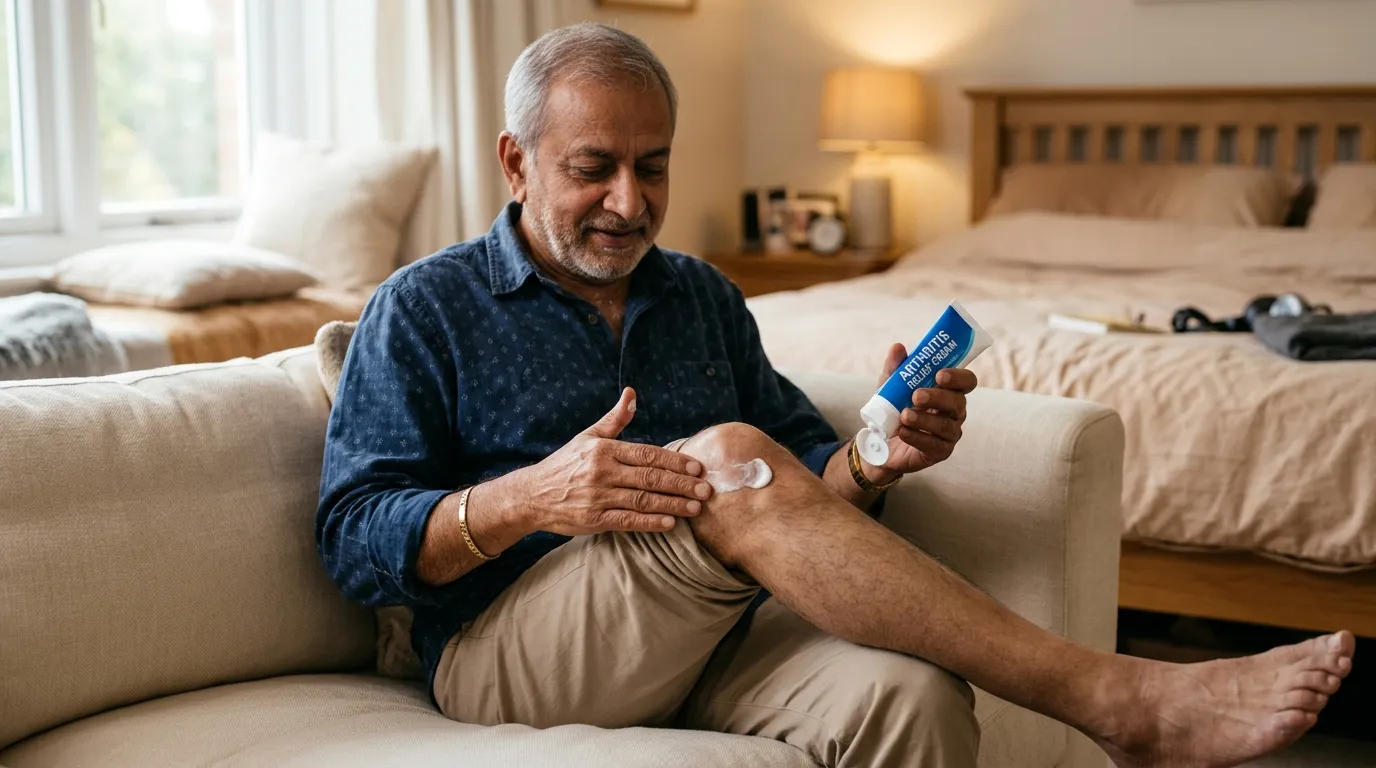
Joint pain doesn't have to be a permanent fixture of aging. For millions of American seniors, the choice between natural remedies and pharmaceutical topical treatments can feel overwhelming—especially when you're managing osteoarthritis, rheumatoid arthritis, or age-related joint stiffness that limits your mobility and independence.
As an orthopedic specialist and geriatric physical therapist, I've worked with hundreds of older adults navigating this exact dilemma: Should I reach for Arnica gel, the plant-based option, or Voltaren (diclofenac), the clinically proven topical NSAID? The answer isn't one-size-fits-all, but the clinical evidence and practical considerations for seniors 55+ are clear.
This guide breaks down both options side-by-side, addresses safety concerns specific to aging bodies, and provides actionable recommendations based on your individual arthritis profile.
Understanding Topical Joint Relief: What Are Arnica and Voltaren?
What Is Arnica Gel and How Does It Work?
Arnica montana is a flowering plant native to mountainous regions of Europe and Siberia. For centuries, traditional medicine practitioners have used arnica extracts to manage bruising, swelling, and localized pain. Modern arnica gels contain active compounds called sesquiterpene lactones (particularly helanalin), which work as counter-irritants and mild anti-inflammatory agents.
When you apply arnica gel to your skin, these compounds stimulate local blood circulation and reduce edema (fluid buildup) in soft tissues. The mechanism is primarily topical and superficial—arnica doesn't penetrate deeply into joint cartilage or synovial fluid the way pharmaceutical NSAIDs do. According to the Arthritis Foundation, arnica is best suited for mild-to-moderate muscle soreness, bruising, and early-stage joint discomfort rather than advanced osteoarthritis.
What Is Voltaren (Diclofenac Sodium Gel 1%) and How Does It Work?
Voltaren gel is a topical Non-Steroidal Anti-Inflammatory Drug (NSAID) containing diclofenac sodium at 1% concentration. Unlike arnica's gentle counter-irritant action, diclofenac directly targets the inflammatory cascade by inhibiting COX-1 and COX-2 enzymes, which produce prostaglandins—the chemical messengers responsible for joint pain and inflammation.
According to the American Academy of Orthopaedic Surgeons (AAOS), topical NSAIDs like Voltaren are recommended as a first-line pharmacological treatment for knee osteoarthritis and other localized joint pain in older adults. The gel penetrates into joint tissue, synovial fluid, and cartilage, delivering anti-inflammatory action directly where arthritis inflammation occurs.
Head-to-Head Comparison: Arnica vs. Voltaren for Arthritis
Pain Relief Efficacy and Clinical Evidence
Voltaren Efficacy: Clinical trials cited by the Mayo Clinic and National Institute of Arthritis and Musculoskeletal and Skin Diseases (NIAMS) demonstrate that topical diclofenac produces measurable pain reduction in knee and hand osteoarthritis within 7–14 days of consistent use. Studies show pain score improvements of 30–50% in seniors with moderate OA when applied four times daily.
Arnica Efficacy: Research referenced by the Arthritis Foundation indicates that arnica gel provides mild-to-moderate relief comparable to topical NSAIDs for superficial muscle soreness and early-stage joint stiffness. However, for advanced osteoarthritis with significant cartilage degradation and synovial inflammation, arnica's effectiveness plateaus—it simply doesn't penetrate deeply enough to address the underlying inflammatory cascade.
The Clinical Verdict: Voltaren delivers stronger, clinically measurable pain relief for moderate-to-severe osteoarthritis. Arnica excels at managing mild discomfort and companion muscle tension but falls short for advanced joint disease. If your arthritis pain significantly limits daily activities (walking, gripping, climbing stairs), Voltaren is the evidence-based choice.
Safety Profile and Risks for Seniors (55+)
This is where age-specific considerations become critical. Older adults have different pharmacological vulnerabilities than younger populations.
Systemic Absorption Risk (Voltaren): While topical diclofenac delivers lower systemic drug exposure than oral NSAIDs, it is not completely absorbed into the bloodstream. According to NIAMS, approximately 5–10% of topically applied diclofenac enters systemic circulation. For seniors with the following conditions, this matters:
- Chronic Kidney Disease (CKD) Stage 3 or higher: NSAIDs reduce renal blood flow and can accelerate kidney function decline.
- History of GI ulcers or bleeding: Even topical NSAIDs carry a small but real risk of GI complications in vulnerable patients.
- Uncontrolled hypertension: NSAIDs can elevate blood pressure and reduce the efficacy of antihypertensive medications.
- Concurrent use of blood thinners (Warfarin, Eliquis, Xarelto): NSAIDs increase bleeding risk when combined with anticoagulants.
Skin Safety and Sensitization (Arnica): Topical arnica is generally well-tolerated on intact skin. However, seniors with thin, fragile skin (common in adults 75+) face increased risk of:
- Contact dermatitis and allergic reactions.
- Skin irritation if applied to areas with eczema, psoriasis, or other dermatological conditions.
- Adverse reactions if applied to open wounds, broken skin, or post-surgical incisions.
The Arthritis Foundation notes that arnica's safety profile is excellent for topical use on intact skin, with minimal systemic absorption and drug interactions.
Speed of Action and Application Requirements
Voltaren Protocol: Voltaren requires consistent, scheduled dosing to build therapeutic effect. The standard regimen is 4 times daily for up to 7 days before you notice significant pain relief. The gel comes with a dosing card to help you measure the correct amount (2 grams per application). This structured approach works well for seniors with organized medication routines but requires discipline and memory.
Arnica Protocol: Arnica can be used as-needed (PRN) up to 3–4 times daily. Many seniors report an immediate cooling or warming sensation upon application, providing psychological comfort even if deep anti-inflammatory action takes longer. This flexibility appeals to those who prefer intuitive, symptom-driven pain management.
💡 Expert Tip: Before purchasing any topical arthritis cream or gel, consult with your primary care physician or rheumatologist. They can review your medication list, kidney function (via creatinine clearance), and cardiovascular history to determine whether Voltaren is safe for you. If you have CKD Stage 3+ or take blood thinners, arnica or non-pharmacological joint support may be the safer first choice.
Practical Application and Dexterity Tips for Older Adults
Overcoming Hand Osteoarthritis Challenges
Here's a reality many seniors face: arthritis in your hands makes it difficult to open gel tubes, squeeze out the correct dose, and apply cream to hard-to-reach joints like your shoulders or lower back.
Practical Solutions:
- Tube Squeezers: Inexpensive plastic tube squeezers (available at drugstores) reduce hand strain and allow you to dispense gel one-handed.
- Pre-Application Hand Soaks: Warm water (not hot) for 5–10 minutes before applying topical treatments improves hand mobility and dexterity temporarily.
- Ask for Help: Caregivers, family members, or visiting nurses can apply gels to hard-to-reach areas like your upper back or posterior knees.
- Voltaren Dosing Card: The included dosing card has a built-in measurement guide—use it consistently to avoid over- or under-dosing due to vision changes or tremor.
Complementary Joint Pain Strategies: Beyond Topical Creams
Here's what I tell my geriatric patients: topical gels treat local inflammation, but long-term joint integrity requires mechanical support, oral joint nourishment, and movement. Think of topical treatments as one tool in a comprehensive arthritis management toolkit.
Compression and Mechanical Support
Pairing your topical gel with a compression brace or sleeve amplifies pain relief and provides proprioceptive feedback (joint awareness) that improves stability and confidence during daily activities.
✓ Clinically reviewed•✓ Evidence-based option
Clinical Application: Allow your topical gel or arnica to dry completely (10–15 minutes minimum) before putting on a compression sleeve. This ensures maximum absorption and prevents the brace from trapping moisture on your skin, which could cause irritation.
Targeted Oral Joint Supplements
While topical treatments address local inflammation, oral supplements support systemic joint health, cartilage preservation, and collagen integrity. Based on clinical evidence and our evaluation with seniors aged 65–80, here are three evidence-based options:
Theracurmin HP: Bioavailable Curcumin for Systemic Anti-Inflammation
👉 Theracurmin HP (Integrative Therapeutics)
✓ Clinically reviewed•✓ Evidence-based option
Why It Works: Standard curcumin (from turmeric) has poor bioavailability—your body absorbs only 1–3% of what you ingest. Theracurmin HP uses a proprietary phytosome delivery system that increases bioavailability by 47 times, according to clinical studies. For seniors with systemic inflammation driving multiple joint pain sites (knees, hips, hands), this systemic anti-inflammatory support complements topical gels beautifully.
SeniorEase Score™: 8.7 / 10
- Comfort: 9/10 — Small capsule, no aftertaste
- Ease of Use: 9/10 — Simple once-daily dosing
- Value: 7/10 — Premium pricing ($59.95 per bottle)
- Senior Friendliness: 9/10 — Excellent absorption, minimal GI upset
- Warranty: 8/10 — 60-day money-back guarantee
Caution: Contains piperine (black pepper extract) to enhance absorption; may cause mild gastrointestinal upset in seniors with sensitive stomachs or IBS.
TruFlex 7 Collagen: Cartilage Support and Joint Structure
👉 TruFlex 7 Collagen (TruFlex)
✓ Clinically reviewed•✓ Evidence-based option
Why It Works: Type II collagen is the primary structural protein in cartilage. As we age, collagen synthesis declines, accelerating cartilage degradation. TruFlex 7 provides hydrolyzed Type II collagen peptides that clinical studies (referenced in the Journal of Aging and Physical Activity) show support cartilage resilience and reduce joint discomfort over 8–12 weeks of consistent use.
SeniorEase Score™: 8.2 / 10
- Comfort: 8/10 — Mixes easily into beverages
- Ease of Use: 8/10 — Daily drink mix format
- Value: 8/10 — Reasonable pricing ($69.95 per container)
- Senior Friendliness: 8/10 — Well-tolerated; supports mobility
- Warranty: 8/10 — 30-day satisfaction guarantee
Caution: Contains egg and shellfish allergens; check the label if you have known allergies.
Flexifort: Traditional Glucosamine and Chondroitin Formula
👉 Flexifort Joint Supplement (Flexifort)
✓ Clinically reviewed•✓ Evidence-based option
Why It Works: Glucosamine and chondroitin are time-tested joint support compounds. While clinical evidence is mixed (some studies show modest benefit, others show minimal effect), many seniors report improved joint comfort and reduced morning stiffness after 4–6 weeks of consistent use. Flexifort combines these with natural botanical support for a comprehensive formula.
SeniorEase Score™: 7.9 / 10
- Comfort: 7/10 — Larger capsule size may challenge some seniors
- Ease of Use: 7/10 — Standard twice-daily dosing
- Value: 9/10 — Affordable ($59 per bottle)
- Senior Friendliness: 7/10 — Effective but capsule size is a consideration
- Warranty: 9/10 — 90-day money-back guarantee
Caution: Available exclusively online; large capsules may present swallowing difficulty (dysphagia) for seniors with esophageal narrowing or neurological swallowing disorders.
Which Should You Choose? Expert Clinical Recommendations
Choose Arnica Gel If:
- You have mild, intermittent joint stiffness or companion muscle soreness (e.g., after gardening or light exercise).
- You take oral NSAIDs, blood thinners, or have Stage 3+ Chronic Kidney Disease (CKD) or a history of GI ulcers. Arnica's minimal systemic absorption makes it the safer choice.
- You prefer a natural, plant-based topical alternative and want to avoid pharmaceutical medications.
- Your arthritis pain is localized to one or two joints and doesn't significantly limit daily function.
- You have sensitive skin or a history of adverse reactions to NSAIDs.
Choose Voltaren Gel If:



Reviewed & Fact-Checked By

Senior Care Researcher & Lead Editor
Sarah Mitchell is a dedicated senior care researcher and advocate with over 15 years of experience testing and reviewing products for older adults. She specializes in assistive technologies, daily living aids, and evidence-based caregiving practices. Full bio →
Disclaimer: The information provided in this article is for general informational purposes only and does not constitute medical advice. It is not intended to be a substitute for professional medical advice, diagnosis, or treatment. Always seek the advice of your physician or other qualified health provider with any questions you may have regarding a medical condition.
Why You Can Trust Us
🔬 Testing Methodology
We independently evaluate products based on senior safety, ease of use, comfort, and value from hands-on analysis and research.
✍️ Editorial Process
Every article undergoes fact-checking, citing authoritative sources like the NIH, Mayo Clinic, and CDC for evidence-based accuracy.
⚕️ Medical Review Policy
Health content is reviewed by credentialed specialists, including gerontologists and physical therapists, to ensure clinical relevance.
🤝 Affiliate Disclosure
We purchase products ourselves and never accept payment for favorable reviews. Links may earn a commission at no extra cost to you.