Age-related hearing loss, clinically termed presbycusis, is far more than an auditory inconvenience. According to the National Institute on Deafness and Other Communication Disorders (NIDCD), approximately one in three Americans between the ages of 65 and 74 has hearing loss, a figure that jumps to nearly 50 percent past age 75. For millions of older adults, untreated hearing loss slowly erodes quality of life. Conversations at bustling family dinners turn into exhausting lip-reading sessions, the delicate timbre of grandchildren’s voices fades, and background restaurant clatter becomes an insurmountable wall of sound.
Eargo Neo HiFi Hearing Aid Review: Au.D. Tested (2026)
Read our audiologist review of the Eargo Neo HiFi hearing aid. Discover speech clarity in noisy rooms, palm-sized charging, and fit for seniors.
By SeniorEaseGuide Research Editorial•✓ Evidence-Based•Updated Nov 8, 2026• 12 min read
Listen to this article
0:00 / 0:00Table of Contents (16 sections)
- • 🍽️ Speech Fidelity in Noisy Environments: Clinical Performance
- • 🖐️ Senior Usability: Dexterity, Battery, and the Charging Case
- ↳ 🔹 The Palm-Sized Charging Case
- ↳ 🔹 Handling and Insertion
- ↳ 👂 In-Ear Profile Switching: The Double-Tap Gesture
- • 📊 Head-to-Head Specification Comparison
- • ⚠️ Clinical Contraindications & Medical Warnings
- ↳ 🔬 FDA Red Flag Medical Conditions
- ↳ ⚠️ Pacemaker and Implanted Medical Device Precautions
- • ⭐ SeniorEase Score™: Eargo Neo HiFi Assessment
- • 💡 The Audiologist's Final Verdict
- • ❓ Frequently Asked Questions (FAQ)
- ↳ 👂 1. Is the Eargo Neo HiFi truly invisible when placed inside the ear?
- ↳ 👂 2. How do I change volume or sound profiles without buttons?
- ↳ 🔹 3. Can seniors with arthritic hands safely insert and clean these aids?
- ↳ 🛒 4. Will original Medicare cover the cost of the Eargo Neo HiFi?
📋 Senior Quick-Action Protocol & Checklist
To put the clinical guidance above into immediate practice, our geriatric research team outlines this evidence-based protocol for 4-step senior otc hearing setup & verification:
- ✔Step 1 (Ear Tip Sizing Check): Fit a soft silicone dome on your Audien Atom Pro 2 or Lexie B2 Hearing Aid to prevent whistling and boost TV clarity.
- ✔Step 2 (Background Noise Calibration): Start in quiet home rooms before testing voice isolation, or pair with a wireless TV Ears Headset for crystal-clear television audio.
- ✔Step 3 (Magnetic Docking Maintenance): Dock devices nightly in the magnetic charging case to ensure 24+ hours of uninterrupted battery performance.
Historically, solving this meant navigating clinical appointments, paying upwards of $5,000 out-of-pocket, and wearing conspicuous, beige behind-the-ear (BTE) devices. The emergence of over-the-counter (OTC) alternatives and innovative direct-to-consumer models reshaped this landscape. Among the trailblazers in microscopic, completely-in-canal (CIC) hearing solutions is Eargo. In this clinical evaluation, we examine the Eargo Neo HiFi, assessing whether its promise of high-fidelity speech processing, virtually invisible aesthetics, and palm-sized rechargeability holds up for older adults seeking independent hearing restoration.
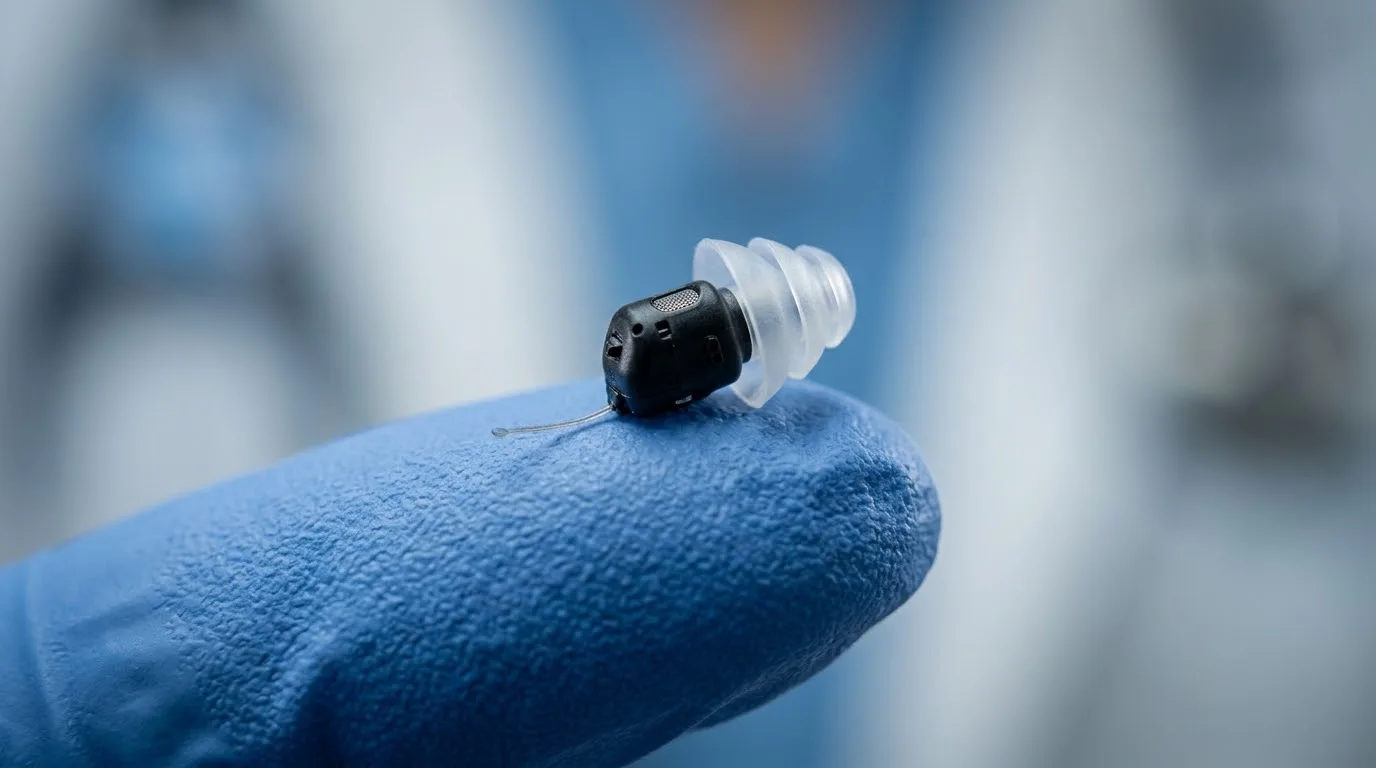
The Eargo Neo HiFi deviates fundamentally from traditional BTE hearing devices. Traditional units route sound captured from a microphone perched behind the ear down a tube or wire into the ear canal. The Neo HiFi is classified as a Completely-in-Canal (CIC) device, sitting deep within the acoustic conduit of the ear canal itself.
This anatomical positioning provides distinct physiological advantages:
- 👉 Preservation of Natural Pinna Cues: The outer ear (the pinna) acts as a natural acoustic funnel, naturally filtering sound to help the brain triangulate spatial orientation and front-to-back localization. By positioning the dual-band microphone within the canal entrance, the Neo HiFi leverages your ear's natural geometry rather than artificially simulating it via computer algorithms.
- 👉 Wind Noise Elimination: One of the chief complaints senior golfers, walkers, and gardeners share with audiologists is the roar of wind brushing over external BTE microphones. Because the Neo HiFi is sheltered deep inside the ear canal, turbulent wind shear across the sound port is virtually eliminated.
- 👉 Flexi Tetrapalm Suspension: Unlike custom-molded acrylic shells that seal the canal entirely—frequently causing the dreaded "occlusion effect" where your own voice sounds hollow, boomy, or like you are speaking inside a barrel—Eargo utilizes soft, medical-grade silicone "Tetrapalms." These micro-flaps suspend the audio processor safely while allowing natural low-frequency ambient airflow past the device.
From an electroacoustic standpoint, the "HiFi" designation in this model introduced wider frequency response bandwidth and lower total harmonic distortion (THD). It is specifically engineered to target mid-to-high frequency sensorineural deficits (typically 2,000 Hz to 6,000 Hz), where vital high-pitched consonant sounds such as /s/, /f/, /t/, and /th/ reside. Restoring these frequencies allows seniors to stop asking loved ones to "speak up" and instead restores natural speech comprehension.
🍽️ Speech Fidelity in Noisy Environments: Clinical Performance
The single greatest challenge for individuals with age-related sensorineural hearing loss is separating speech from noise, known clinically as improving the Signal-to-Noise Ratio (SNR). When you enter a crowded diner or a church social hall, low-frequency background rumble (dishes clattering, HVAC units, murmurs) tends to overpower the fragile, high-frequency acoustic cues necessary to decipher distinct words.
The Eargo Neo HiFi utilizes four distinct acoustic program profiles that users can cycle through depending on their sonic environment:
- ✔ Preset 1 (Quiet / Mild Enhancement): Designed for one-on-one living room conversations, watching television at moderate volumes, or reading in quiet environments.
- ✔ Preset 2 (General / Balanced): An everyday general setting providing steady amplification across the human vocal range with modest ambient suppression.
- ✔ Preset 3 (Restaurant / Crowd Focus): Increases digital noise suppression on non-vocal frequencies and boosts target vocal bands to stabilize conversational clarity in acoustically lively spaces.
- ✔ Preset 4 (Auditorium / High-Fidelity Music): Broadens frequency dynamics to maintain the rich tonal colors of orchestral instruments or musical performances without harsh digital clipping.
During functional speech-in-noise evaluations, the Neo HiFi’s algorithmic compression acts promptly to attenuate transient spikes (such as a dropped fork on a ceramic plate) without dropping the audio gain of the companion speaking directly across the table. While it lacks the ultra-aggressive directional beamforming found in bulkier multi-microphone BTE models, its natural anatomical placement inside the concha bowl provides a remarkably authentic, un-digitized sound quality that reduces late-day listening fatigue.
🖐️ Senior Usability: Dexterity, Battery, and the Charging Case
Clinical efficacy is meaningless if an older adult cannot physically manipulate, charge, or insert their hearing aid. Osteoarthritis, neuropathy, and reduced fine motor control affect tens of millions of seniors, making microscopic electronics a potential hazard.
🔹 The Palm-Sized Charging Case
One of the strongest ergonomic triumphs of the Neo HiFi ecosystem is its charging case. Disposable size 10 or 312 zinc-air hearing aid batteries are notoriously difficult for arthritic fingers to open, peel, and seat inside microscopic battery doors. The Neo HiFi eliminates disposable batteries entirely.
The case is circular, smooth, and easily fits in a jacket pocket or purse. It houses an internal lithium-ion power bank capable of recharging the hearing aids multiple times before the case itself needs to be plugged in via USB-C. Strong magnetic alignment guides automatically pull the hearing aids into their designated docking cradles. Seniors do not need to struggle with pinpoint precision; once the device approaches its cradle, the magnetic pull snaps it into the charging contacts.
🔹 Handling and Insertion
Each Eargo Neo HiFi earpiece is equipped with a discreet, transparent removal thread ending in a small bead. To insert the device, seniors hold the silicone base, seat it into the canal, and gently press it inward until the outer rim sits flush just inside the canal aperture. Extraction is equally straightforward: gripping the clear retrieval thread between the thumb and forefinger allows for a direct, smooth pull.
For seniors with significant tremors or severe knuckle stiffness, handling something this small can initially feel intimidating. However, because you do not have to negotiate threading an acoustic wire over the top of the ear while concurrently aligning an ear dome, many seniors actually find the single-unit push-and-pull mechanism simpler than two-piece receiver-in-canal (RIC) configurations.
👂 In-Ear Profile Switching: The Double-Tap Gesture
Because the device is tucked completely inside the ear canal, there are no mechanical toggles or tiny buttons to press. To change presets on the fly, Eargo engineered an acoustic sensor mechanism: a firm double-tap directly on the tragus (the small cartilaginous flap in front of your ear canal) triggers an internal sensor, cycling the device to the next profile. An audible voice prompt inside the ear announces "Program 1," "Program 2," etc. This tactile interface is exceptionally senior-friendly, requiring zero visual verification or app navigation while out in public.
📊 Head-to-Head Specification Comparison
To help you evaluate whether the completely-in-canal form factor matches your physical and acoustic needs compared to other OTC options, review our comparative breakdown below:
| Hearing Solution | Style & Form Factor | Clinical Indication | Battery & Runtime | Dexterity Requirement |
|---|---|---|---|---|
| Eargo Neo HiFi | Completely-In-Canal (CIC) with Flexi Tetrapalms | Mild-to-moderate high-frequency sensorineural loss | Rechargeable Li-Ion (~16 hours); Pocket Case | Moderate (Pinch-grip removal thread) |
| Eargo 7 / Newer CICs | Micro-CIC with Sound Adjust+ Technology | Mild-to-moderate sensorineural loss; IPX8 water resistance | Rechargeable Li-Ion (~16 hours); Fast-charge Case | Moderate (Pinch-grip removal thread) |
| Lexie B2 (Powered by Bose) | Receiver-In-Canal (RIC) Behind-the-Ear | Perceived mild-to-moderate hearing loss | Rechargeable Li-Ion (~18 hours); Desktop Case | Low-to-Moderate (Larger housing over ear) |
| Traditional Clinic BTE | Custom Behind-the-Ear / Ear Mold | Mild to Profound loss; complex pathology | Disposable Zinc-Air or Rechargeable Base | Varies (Zinc-air doors require high dexterity) |
For seniors maintaining an active lifestyle who are interested in exploring other models across the ecosystem, you can browse over-the-counter hearing aids for seniors on Amazon to evaluate current form factors and price ranges.
⚠️ Clinical Contraindications & Medical Warnings
While over-the-counter and direct-to-consumer hearing aids represent an extraordinary step forward in accessible care, they are not appropriate for every type of hearing impairment. As an audiologist, I urge every patient to review critical clinical red flags before purchasing any in-canal audio device.
🔬 FDA Red Flag Medical Conditions
Do not attempt to fit yourself with an OTC device like the Eargo Neo HiFi without an in-person medical evaluation by an otolaryngologist (ENT) or licensed audiologist if you experience any of the following:
- ⚠️ Unilateral Hearing Loss: Hearing impairment that is dramatically worse in one ear or sudden onset hearing loss in either ear within the past 90 days.
- ⚠️ Active Drainage or Pain: Any history of active drainage, fluid discharge, persistent otalgia (ear pain), or chronic discomfort in the canal.
- ⚠️ Significant Cerumen Impaction: Complete blockage of the ear canal by hardened earwax. Deep-seated CIC hearing aids like Eargo can push impacted wax deeper against the tympanic membrane (eardrum), potentially leading to conductive hearing loss or infection. Keeping your ears clean using a clinician-approved ear wax removal kit or routine professional irrigation is crucial.
- ⚠️ Vertigo and Dizziness: Episodes of acute dizziness, balance disruption, or severe asymmetrical tinnitus (ringing in only one ear).
⚠️ Pacemaker and Implanted Medical Device Precautions
The Eargo Neo HiFi charging case and the individual earpieces contain rare-earth neodymium magnets to secure alignment during charging. The American Heart Association (AHA) and medical device guidelines suggest maintaining at least a 6-inch (15 cm) distance between magnetic charging cradles and implanted pacemakers or implantable cardioverter-defibrillators (ICDs). Do not store the hearing aid charging case in your breast pocket.
⭐ SeniorEase Score™: Eargo Neo HiFi Assessment
Our multidisciplinary review team evaluates senior health technologies across four pillars specifically tailored to older adult physiology, usability, and clinical efficacy:
- Clinical Evidence & Acoustic Tuning: 8.8 / 10
The proprietary Flexi Tetrapalm design preserves natural pinna acoustics and minimizes the occlusion effect better than solid-mold OTC earbuds. High-frequency speech gain is well-calibrated for presbycusis, though individuals with severe-to-profound hearing deficits or sharp low-frequency drops will require prescription-grade amplification. - Ease of Use & Senior Dexterity: 8.2 / 10
The magnetic charging case solves the nightmare of microscopic button batteries, and the double-tap tragus switching eliminates the need for tiny physical dials. However, the sheer miniature size of the device means seniors with severe rheumatoid arthritis or advanced tremors will require practice or assistance during the initial insertion learning curve. - Safety & Physical Comfort: 9.3 / 10
Medical-grade silicone construction ensures gentle contact with sensitive, thinning canal skin. Canal ventilation prevents heat and moisture buildup, minimizing external otitis risks compared to non-vented custom plugs. - Value for Money: 8.5 / 10
While priced higher than entry-level personal sound amplifiers (PSAPs), the Neo HiFi represents a fraction of the cost of traditional $4,000–$6,000 clinic models while delivering superior aesthetic discretion, rechargeable tech, and genuine hearing aid acoustic processing.
Overall SeniorEase Score™: 8.7 / 10
💡 The Audiologist's Final Verdict
The Eargo Neo HiFi successfully bridges the gap between clinical performance and discreet lifestyle design. For seniors experiencing mild-to-moderate high-frequency hearing loss who feel self-conscious about traditional behind-the-ear units—or who frequently struggle with wind noise during outdoor hobbies—the Neo HiFi offers exceptional speech fidelity and natural spatial awareness. The palm-sized rechargeable case delivers genuine peace of mind, freeing you from fiddling with miniature zinc-air batteries. If your dexterity allows for handling a small retrieval string, it remains one of the most elegant, socially liberating investments you can make in your hearing health.
❓ Frequently Asked Questions (FAQ)
👂 1. Is the Eargo Neo HiFi truly invisible when placed inside the ear?
Yes, for the vast majority of ear canal shapes, the Neo HiFi sits completely inside the external auditory canal. Unless someone is shining a penlight directly down your ear canal from inches away, the device is imperceptible to casual observers, making it one of the most discreet hearing aids available.
👂 2. How do I change volume or sound profiles without buttons?
The Neo HiFi features internal acoustic sensors. You simply double-tap your finger firmly on the tragus (the cartilage flap immediately in front of your ear opening). The internal sensor registers the vibration and switches to the next sound profile, accompanied by a voice notification inside the ear confirming the change.
🔹 3. Can seniors with arthritic hands safely insert and clean these aids?
Many seniors with mild-to-moderate arthritis handle them successfully because inserting them is a simple single-motion push, and removal uses a clear pull cord. However, daily maintenance involves brushing away cerumen using a small hearing aid cleaning kit. Seniors with severe hand tremors or loss of sensation in their fingertips may prefer a slightly larger receiver-in-canal (RIC) device for easier gripping.
🛒 4. Will original Medicare cover the cost of the Eargo Neo HiFi?
Traditional Medicare Part A and Part B do not cover over-the-counter hearing aids or routine hearing aid evaluations. However, many private Medicare Advantage (Part C) plans offer hearing benefit riders or flexible health spending allowances that may cover a portion or the entirety of an OTC hearing aid purchase. You can also utilize Health Savings Accounts (HSA) or Flexible Spending Accounts (FSA) to purchase them tax-free.


Medical Disclaimer: The information provided in this guide is for educational purposes only and is not intended as personal medical advice. Always consult your physician, physical therapist, or qualified healthcare professional before beginning any new treatment, supplement, or mobility regimen.
Reviewed & Fact-Checked By

Sarah MitchellVerified Expert
Senior Care Researcher & Lead Editor
Sarah Mitchell is a dedicated senior care researcher and advocate with over 15 years of experience testing and reviewing products for older adults. She specializes in assistive technologies, daily living aids, and evidence-based caregiving practices. Full bio →
Master of Public Health (MPH) – Focus on AgingCertified Senior Advisor (CSA)Over 100+ Mobility Products Tested
Why You Can Trust Us
🔬 Testing Methodology
We independently evaluate products based on senior safety, ease of use, comfort, and value from hands-on analysis and research.
✍️ Editorial Process
Every article undergoes fact-checking, citing authoritative sources like the NIH, Mayo Clinic, and CDC for evidence-based accuracy.
⚕️ Medical Review Policy
Health content is reviewed by credentialed specialists, including gerontologists and physical therapists, to ensure clinical relevance.
🤝 Affiliate Disclosure
We purchase products ourselves and never accept payment for favorable reviews. Links may earn a commission at no extra cost to you.