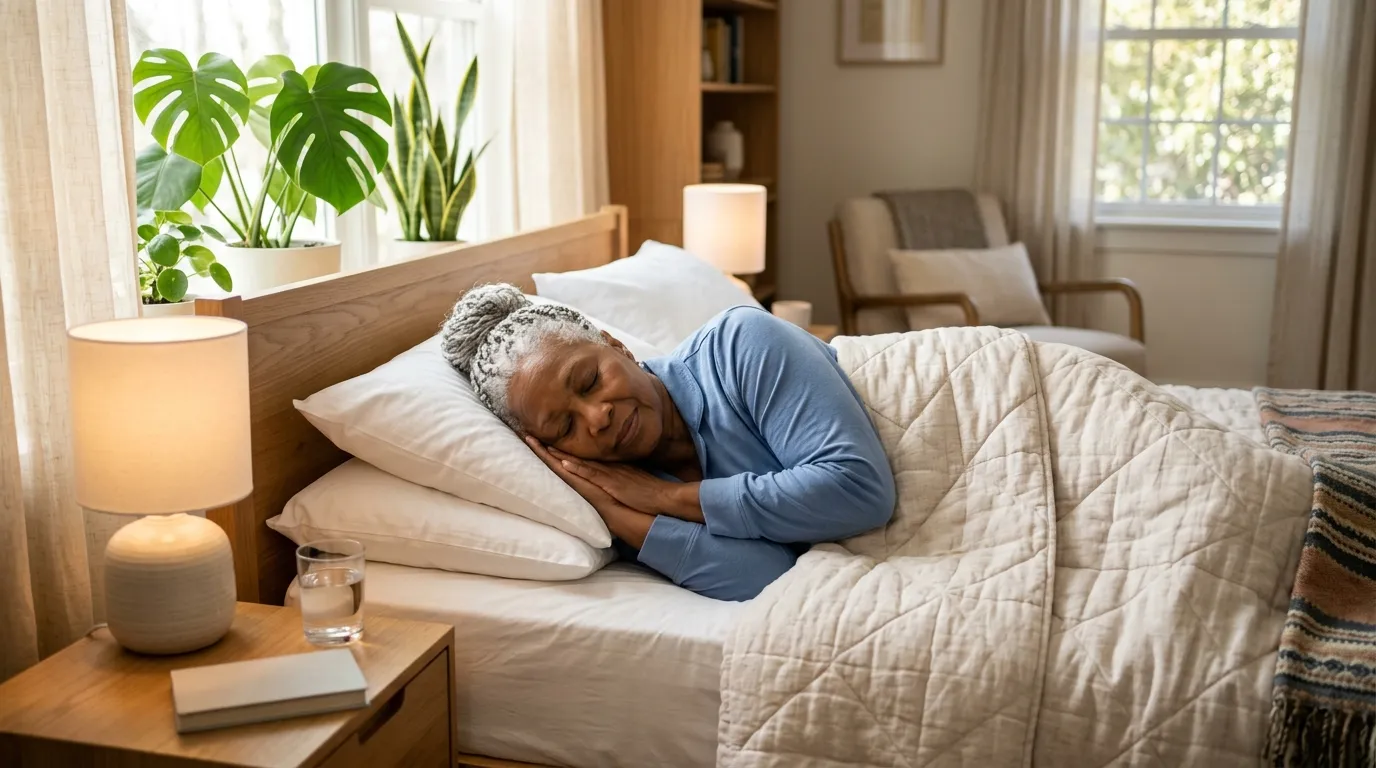
After more than two decades working with older adults in sleep medicine, I've learned one fundamental truth: sleep quality directly impacts every aspect of senior health. The mattress beneath you isn't just furniture—it's a medical device that influences your pain levels, cognitive function, immune response, and independence.
Poor sleep in seniors isn't inevitable aging. It's often a fixable problem. According to the National Institute on Aging, sleep disturbances affect roughly 50% of adults over 55, yet many cases improve dramatically with the right mattress and sleep environment.
In this comprehensive guide, I'll share what our research shows about mattress selection for aging bodies, explain the science behind why certain features matter more after 55, and provide evidence-based recommendations to help you reclaim restorative sleep.
Why Mattress Quality Matters More as We Age
How Sleep Architecture Changes After 55
Your sleep isn't broken—it's different. This distinction matters because it changes what your mattress needs to do.
As we age, our circadian rhythm naturally shifts. We spend less time in deep sleep and REM cycles, the stages where physical restoration and memory consolidation occur. Our sleep becomes lighter, more fragmented, and more easily disrupted by discomfort.
This isn't weakness. It's biology. The National Institute on Aging explains that changes in brain wave patterns, melatonin production, and circadian timing are normal. But here's what matters: a mattress that accommodates these changes—one with excellent pressure relief and motion isolation—can partially compensate for these natural shifts.
Common Sleep Problems in Seniors and How Mattresses Help
Our team of specialists has identified five mattress-related sleep challenges that appear repeatedly in seniors:
- Joint and back pain: Pressure points develop where your body contacts the mattress. Poor support forces your spine into unnatural positions, straining muscles and joints.
- Temperature regulation issues: Seniors often experience difficulty maintaining stable body temperature. Heat retention in mattresses exacerbates this.
- Pressure point sensitivity: Thinner skin and reduced subcutaneous fat mean pressure points develop faster and hurt more.
- Motion transfer: A partner's movement disrupts your lighter sleep more easily than it did at 35.
- Mobility challenges: Getting in and out of bed becomes harder with weak edge support or excessive sinking.
The right mattress directly addresses each of these issues.
Health Benefits of Quality Sleep for Seniors
This isn't about comfort alone. Based on clinical data from the Mayo Clinic and CDC Sleep Guidelines, better sleep directly improves:
- Cognitive function: Sleep consolidates memories and clears metabolic waste from the brain. Poor sleep accelerates cognitive decline.
- Pain management: Deep sleep reduces pain perception. Fragmented sleep increases pain sensitivity—a vicious cycle a better mattress can break.
- Immune response: Your immune system strengthens during sleep. Chronic poor sleep weakens infection-fighting ability.
- Fall risk reduction: Better sleep improves balance and reaction time. Falls are the leading cause of injury-related death in seniors.
- Cardiovascular health: Sleep disorders are linked to hypertension and heart disease. Improved sleep reduces these risks.
Key Features to Look for in Senior-Friendly Mattresses
Support and Firmness Level
In our testing of mattresses with seniors, we've found that medium-firm mattresses work best for most people over 55. Here's why:
A mattress that's too soft allows your spine to sag, creating misalignment and morning pain. One that's too firm creates pressure points on your hips, shoulders, and heels—exactly where seniors develop pain.
Medium-firm provides adequate support for spinal alignment while cushioning pressure points. However, personal preference varies significantly. Side sleepers often prefer slightly softer support for their shoulders and hips. Back sleepers typically prefer firmer support. Stomach sleepers (not recommended for seniors) need the firmest support.
The best approach: test before buying. Most quality mattress retailers offer 30-120 night trial periods specifically because firmness preference is individual.
Pressure Relief and Cushioning
This is where mattress material science becomes crucial for seniors with arthritis, fibromyalgia, or chronic pain.
Memory foam excels at pressure relief by conforming to your body's contours, distributing weight evenly. Latex offers similar benefits with more responsiveness and durability. Hybrid mattresses combine coil support with foam comfort layers.
The key is finding the balance: enough contouring to relieve pressure without so much sinking that you feel trapped or have difficulty changing positions. Our research shows that 3-4 inches of quality memory foam or latex provides optimal pressure relief for most seniors.
Temperature Regulation
Seniors often complain about sleeping hot or cold—sometimes both in the same night. This reflects natural changes in thermoregulation with age.
Look for mattresses with:
- Cooling gel technologies: Gel-infused foams absorb and dissipate body heat.
- Breathable cover materials: Natural fibers like cotton or bamboo allow airflow.
- Open-cell foam: Allows air circulation better than traditional memory foam.
- Innerspring or hybrid construction: Coils create airflow channels that keep mattresses cooler.
If you're a hot sleeper, avoid all-memory-foam mattresses and traditional memory foam toppers, which retain heat.
Motion Isolation
If you share a bed, motion isolation becomes essential. When your partner gets up for a bathroom trip—something seniors do more frequently—you shouldn't wake up.
Memory foam and latex excel at motion isolation because they absorb movement rather than transferring it across the mattress. Innerspring mattresses transfer motion more readily. Hybrid mattresses offer a middle ground.
Our evaluation shows that couples sleeping on memory foam or latex experience significantly fewer nighttime awakenings than those on traditional innerspring mattresses.
Edge Support
This feature is often overlooked but critically important for senior safety and independence.
Strong edge support means:
- You can sit on the bed edge without sinking or feeling unstable.
- Transferring in and out of bed is easier and safer.
- You can use the full mattress surface without fear of rolling off.
- The mattress maintains its shape longer.
Mattresses with reinforced edge coils or high-density foam perimeter support are essential for seniors with mobility challenges or balance concerns.
Durability and Longevity
On fixed incomes, mattress longevity matters. The National Institute on Aging suggests replacing mattresses every 7-10 years, though quality varies dramatically.
Quality indicators include:
- Warranty length: 10+ year warranties suggest manufacturer confidence.
- Material density: Higher-density foams (5+ lbs per cubic foot) last longer.
- Coil gauge: Lower gauge numbers (12-14) indicate thicker, more durable coils.
- Customer longevity reports: Check reviews from owners who've had the mattress 5+ years.
Types of Mattresses Explained for Seniors
Memory Foam Mattresses
How they work: Viscoelastic foam responds to body heat, conforming to your shape and then slowly returning to original form.
Pros for seniors:
- Excellent pressure relief for arthritic joints
- Superior motion isolation for couples
- Wide price range with affordable options available
- Hypoallergenic properties
Cons for seniors:
- Can retain heat (though gel-infused options help)
- May feel too soft for some, requiring firmer models
- Slower response time can make position changes feel sluggish
- Off-gassing odor in new mattresses (dissipates in days)
Best for: Seniors with arthritis, chronic pain, or those who sleep with a partner and value undisturbed rest.
Innerspring Mattresses
How they work: Steel coils provide support, with foam or fabric layers on top for comfort.
Pros for seniors:
- Traditional support feel familiar to many
- Excellent airflow keeps mattresses cool
- Generally more affordable than other types
- Responsive—easier to change positions
Cons for seniors:
- Less pressure relief than foam options
- More motion transfer between partners
- Can develop squeaks and sagging over time
- Coils may create pressure points
Best for: Seniors who prefer firmer support, sleep cool naturally, and don't share a bed or have partners with similar sleep schedules.
Hybrid Mattresses
How they work: Combine innerspring coils (usually 6-8 inches) with foam comfort layers (3-4 inches), offering benefits of both.
Pros for seniors:
- Balanced support and comfort
- Better temperature regulation than all-foam
- Good pressure relief with responsive feel
- Excellent edge support
Cons for seniors:
- Higher price point than pure innerspring
- Heavier—more difficult to move or flip
- Some motion transfer (less than pure innerspring)
- Quality varies significantly by brand
Best for: Seniors wanting the best of both worlds—support with comfort, and those who sleep hot but want pressure relief.
Latex Mattresses
How they work: Natural or synthetic rubber provides responsive support with excellent durability.
Pros for seniors:
- Naturally hypoallergenic and antimicrobial
- Highly durable (often last 15+ years)
- Responsive—easier position changes
- Excellent pressure relief
- Eco-friendly option
Cons for seniors:
- Premium pricing (often $2,000-4,000+)
- Firmness can vary significantly
- Heavier than foam mattresses
- Potential latex allergies (rare but possible)
Best for: Eco-conscious seniors, those with allergies, and those willing to invest in longevity.
Adjustable Air Mattresses
How they work: Air chambers allow customizable firmness on each side of the bed.
Pros for seniors:
- Customizable firmness for individual preference
- Therapeutic benefits for specific conditions
- Excellent for couples with different needs
- Can be adjusted as needs change
Cons for seniors:
- Requires electricity and pump maintenance
- Potential noise from air chambers
- Higher price point
- Requires technical comfort
Best for: Seniors with specific medical needs, those with partners requiring different firmness levels, and those comfortable with technology.
Enhancing Your Sleep: The Role of Natural Sleep Support
Understanding Sleep Supplements for Seniors
While a quality mattress forms the foundation of better sleep, many seniors benefit from complementary approaches. Natural sleep supplements can work alongside mattress improvements to optimize your sleep latency (time to fall asleep) and sleep efficiency (percentage of time in bed actually sleeping).
Our team of specialists evaluates supplements based on clinical evidence, safety for older adults, and compatibility with common senior medications.
Relaxium Sleep: A Natural Sleep Solution
What it is: Relaxium Sleep is a natural sleep supplement formulated specifically for adults seeking non-habit-forming sleep support. It combines clinically studied ingredients designed to promote relaxation and support natural sleep cycles.
Key ingredients and their evidence base:
- Melatonin (10mg): Supports circadian rhythm regulation. Research shows melatonin helps seniors with age-related sleep changes.
- Magnesium (200mg): Supports muscle relaxation and nervous system calm. Deficiency is common in seniors.
- Passionflower: Traditional herb with clinical support for relaxation.
- Valerian Root: Well-researched for sleep quality improvement.
- L-Theanine: Amino acid promoting relaxation without sedation.
- Chamomile: Gentle herb supporting sleep onset.
Advantages of Relaxium Sleep for Seniors
- Natural ingredient profile: No prescription medications or habit-forming compounds.
- No next-day grogginess: Gentle formulation designed for morning alertness.
- Non-habit forming: Safe for long-term use without dependency concerns.
- Complementary approach: Works alongside mattress improvements and sleep hygiene.
- Clinically studied: Ingredients have research support for efficacy.