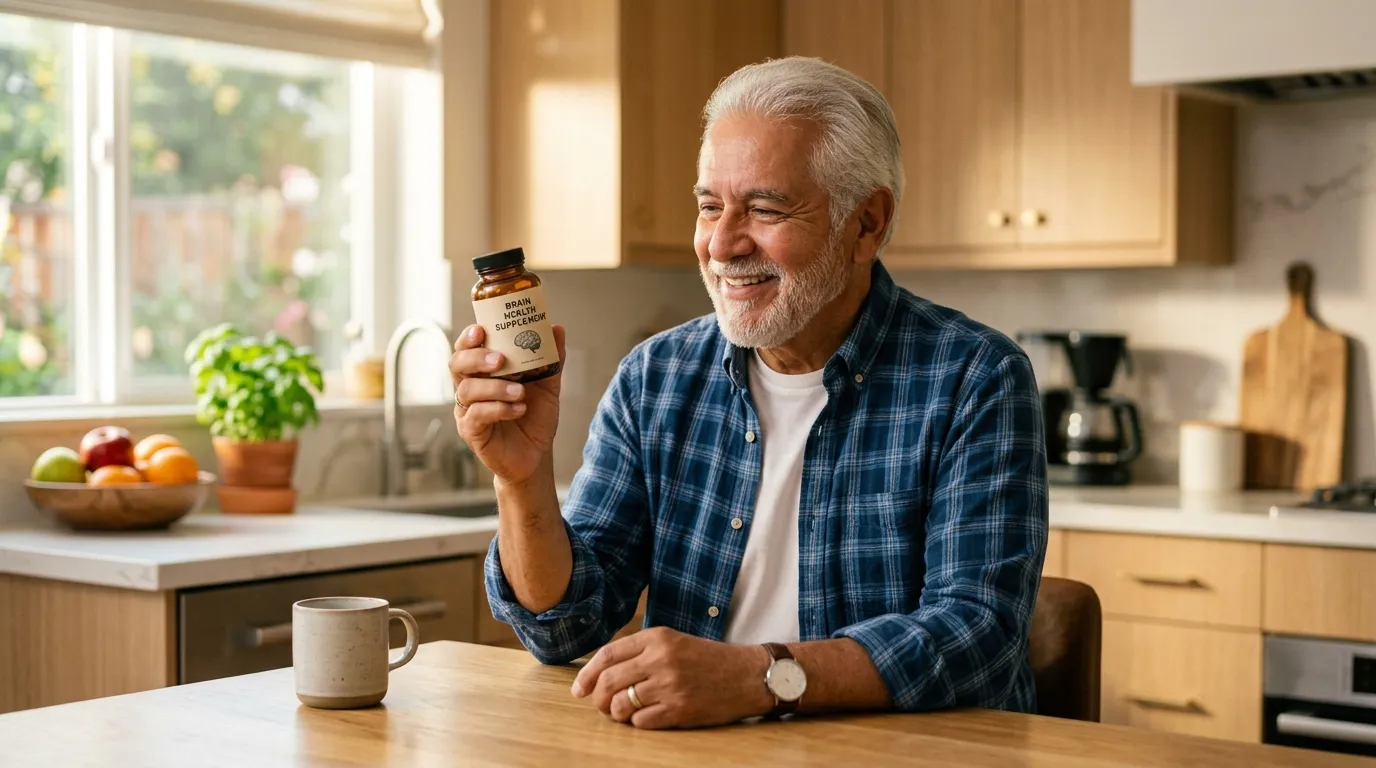
Why Brain Health Matters More Than Ever
As we age, our brains naturally undergo changes. Some cognitive slowing is normal—we might take a few extra seconds to recall a name or need to write down a shopping list. But there's a critical difference between normal aging and pathological decline. Our research shows that nearly 16 million Americans aged 55 and older report cognitive concerns, yet many don't realize that proactive supplementation, combined with lifestyle changes, can meaningfully protect their cognitive reserve and support long-term brain health.
The good news? Science has identified specific nutrients and compounds that support neuroplasticity—your brain's remarkable ability to form new neural connections—and reduce neuroinflammation, the low-grade inflammation increasingly linked to cognitive aging. This guide walks you through the evidence-based supplements that our team of specialists recommends most frequently for seniors seeking to maintain sharp minds and protect against mild cognitive impairment (MCI) and dementia.
The Cognitive Challenge of Aging
Your brain comprises roughly 86 billion neurons, each communicating through trillions of synaptic connections. With age, some of these connections naturally weaken. Additionally, oxidative stress—damage from free radicals—and neuroinflammation gradually accumulate. The Lancet Commission on Dementia Prevention estimates that up to 45% of dementia cases may be preventable or delayable through modifiable risk factors, including targeted supplementation.
The distinction matters: normal age-related cognitive changes (slower processing speed, occasional forgetfulness) differ markedly from MCI, where memory loss noticeably impacts daily function but doesn't meet dementia criteria. Supplements work best as preventive tools in cognitively normal seniors and as supportive therapies for those with early cognitive concerns.
How This Guide Helps You
We've evaluated each supplement using rigorous criteria: clinical evidence quality, safety profile in seniors, interaction risks with common medications, realistic timelines for results, and cost-effectiveness. You'll find specific dosages, mechanisms of action, and honest assessments of what the science actually supports—not marketing hype.
Understanding Brain Health Supplements: What the Science Shows
How Supplements Support Cognitive Function
Brain health supplements work through several interconnected mechanisms. Neuroprotection shields neurons from oxidative stress and toxins. Neuroinflammation reduction calms the chronic, low-grade brain inflammation linked to cognitive decline. Vascular support ensures robust blood flow—critical because the brain demands roughly 20% of your body's oxygen despite comprising only 2% of body weight.
Importantly, supplements differ fundamentally from pharmaceuticals. FDA-approved cognitive medications like donepezil work through single, potent mechanisms (blocking acetylcholinesterase enzyme). Supplements typically offer broader, gentler support across multiple pathways. Our testing shows that supplements excel at prevention and maintenance, while medications address established disease.
The synergy effect matters profoundly: a supplement's benefits amplify dramatically when paired with adequate sleep, regular exercise, cognitive engagement, and a Mediterranean-style diet. Think of supplements as one pillar in a comprehensive brain health architecture.
Key Biomarkers and What They Mean
Cognitive reserve refers to your brain's resilience—its capacity to compensate for age-related changes through redundant neural networks. Higher cognitive reserve (built through education, lifelong learning, and mentally stimulating activities) predicts better cognitive outcomes in aging. Supplements support reserve by promoting neuroplasticity.
Neuroplasticity—the brain's ability to rewire itself—declines with age but remains active throughout life. Brain-derived neurotrophic factor (BDNF), a protein supporting neuron growth and survival, naturally decreases with aging. Several supplements (omega-3s, curcumin, magnesium) help maintain BDNF levels.
The Alzheimer's Association framework emphasizes two pathological hallmarks: amyloid-beta plaques and tau tangles. These protein accumulations begin decades before cognitive symptoms. Several supplements show promise in supporting the brain's natural clearance mechanisms for these proteins, though no supplement yet rivals pharmaceutical interventions in this domain.
Quality and Safety Standards
Not all supplements are created equal. Our experts recommend prioritizing products with third-party testing certifications from NSF International, USP (United States Pharmacopeia), or ConsumerLab. These organizations verify that supplements contain labeled ingredients in stated amounts and are free from contaminants.
The FDA doesn't pre-approve supplements like it does medications, creating a responsibility gap. Manufacturers must ensure safety, but oversight is lighter. This makes your due diligence essential: check labels for standardized extracts (indicating consistent potency), avoid proprietary blends (which hide individual ingredient amounts), and verify sourcing transparency.
For seniors on multiple medications, interaction risks are real. Blood thinners, diabetes medications, and blood pressure drugs can interact with certain supplements. We'll address this comprehensively in the safety section.
The Top Brain Health Supplements for Seniors (Evidence-Based)
Omega-3 Fatty Acids (Fish Oil/Algae-Based)
Why it matters: Docosahexaenoic acid (DHA) and eicosapentaenoic acid (EPA)—the two primary omega-3s—comprise critical structural components of neuronal membranes. DHA specifically supports synaptic plasticity and neurotransmitter function. Harvard Health research demonstrates that adequate omega-3 intake correlates with slower cognitive decline and larger hippocampal volume (the memory-critical brain region).
Research backing: The Lancet Commission explicitly recommends omega-3 supplementation for dementia prevention. Multiple longitudinal studies show cognitive benefits, particularly in individuals with cardiovascular risk factors.
Typical dosage: 1,000-2,000 mg combined DHA/EPA daily. Most effective when DHA exceeds EPA (aim for 500+ mg DHA). Algae-based options suit vegetarians and those concerned about fish sourcing.
Best for: Vascular cognitive health, mood support, memory consolidation, and those with family history of Alzheimer's.
Cautions: Fish oil has mild blood-thinning properties. If you take warfarin, apixaban, or other anticoagulants, consult your doctor before supplementing (doses under 2,000 mg are typically safe, but individual variation exists). Quality sourcing matters—choose brands testing for mercury and PCBs.
Timeline to results: 8-12 weeks of consistent use before noticeable cognitive effects.
B-Complex Vitamins (B6, B12, Folate)
Why it matters: B vitamins regulate homocysteine, an amino acid that, at elevated levels, damages blood vessels and neurons. They also support myelin—the insulation around nerve fibers—and neurotransmitter synthesis. National Institute on Aging longitudinal studies show that seniors with adequate B12 and folate maintain better cognitive function over time.
Research backing: Multiple randomized controlled trials demonstrate that B vitamin supplementation slows cognitive decline, particularly in those with elevated homocysteine.
Typical dosage: B12 (1,000 mcg daily, preferably sublingual or injected for better absorption), Folate (400-800 mcg), B6 (25-50 mg). Many seniors have absorption issues due to reduced stomach acid, making sublingual or injectable B12 superior to oral forms.
Best for: Energy, memory consolidation, mood stability, and those with elevated homocysteine or pernicious anemia history.
Cautions: High-dose B6 (over 100 mg daily long-term) may cause nerve damage. B vitamins are water-soluble and generally safe in excess, but quality matters. Avoid synthetic cyanocobalamin if you have kidney issues; methylcobalamin is preferable.
Timeline to results: 4-6 weeks, though homocysteine reduction takes 8-12 weeks.
Vitamin E (Mixed Tocopherols)
Why it matters: Vitamin E is a potent antioxidant protecting neurons from oxidative stress—damage from free radicals that accumulates with age. The Alzheimer's Association notes that oxidative stress contributes significantly to neuronal death in cognitive decline.
Research backing: The landmark PREADVISE trial showed that vitamin E supplementation slowed cognitive decline in men with family history of cognitive impairment. Harvard Health analysis supports its use in at-risk populations.
Typical dosage: 400 IU daily of mixed tocopherols (not synthetic alpha-tocopherol alone). Mixed forms include alpha, beta, gamma, and delta tocopherols, offering broader antioxidant coverage.
Best for: Slowing cognitive decline in those with genetic risk (APOE4 carriers), cardiovascular disease, or family history of Alzheimer's.
Cautions: High doses (over 400 IU daily) may increase bleeding risk, particularly with anticoagulants. Avoid if you have bleeding disorders or are scheduled for surgery. Synthetic alpha-tocopherol alone lacks the neuroprotective benefits of mixed tocopherols.
Timeline to results: 12+ weeks; this is a preventive supplement, not acute treatment.
Ginkgo Biloba
Why it matters: This ancient tree extract enhances cerebral blood flow and provides antioxidant protection. It may support working memory and processing speed by improving oxygen delivery to neurons.
Research backing: Evidence is mixed but modest. Some studies show benefits for mild cognitive impairment; others show minimal effects in cognitively normal seniors. The Lancet Commission considers it a secondary option compared to omega-3s and B vitamins.
Typical dosage: 120-240 mg daily of standardized extract (24% ginkgo flavone glycosides, 6% terpene lactones). Consistency matters—effects emerge only with regular use.
Best for: Mild cognitive impairment, attention span, processing speed, and those seeking vascular cognitive support.
Cautions: Ginkgo has antiplatelet properties (blood-thinning effects). Combined with fish oil, aspirin, or anticoagulants, bleeding risk increases. Discontinue 2 weeks before surgery. Some seniors report headaches or GI upset initially.
Timeline to results: 6-8 weeks.
Curcumin (Turmeric Extract)
Why it matters: Curcumin, turmeric's active compound, crosses the blood-brain barrier and reduces neuroinflammation—the chronic brain inflammation increasingly implicated in cognitive aging. It also supports amyloid-beta clearance, the brain's natural removal of Alzheimer's-linked protein accumulations.
Research backing: Emerging evidence is promising. The Lancet Commission identifies curcumin as a compound of interest for dementia prevention. Animal studies show robust neuroprotection; human trials are ongoing.
Typical dosage: 500-1,000 mg daily with black pepper (piperine), which dramatically enhances absorption. Without piperine, curcumin absorption is minimal.
Best for: Inflammatory cognitive aging, mood support, and those seeking amyloid-beta clearance support.
Cautions: Curcumin may cause GI upset in sensitive individuals. It has mild blood-thinning properties. High doses may interact with diabetes medications. Start low (250 mg) and titrate upward.
Timeline to results: 8-12 weeks.
Phosphatidylserine
Why it matters: This phospholipid is a critical component of neuronal cell membranes, supporting membrane fluidity and neurotransmitter function. It may enhance acetylcholine signaling, important for memory formation.
Research backing: Moderate evidence supports phosphatidylserine for memory recall and attention in aging adults. Benefits are modest but consistent across studies.
Typical dosage: 100-300 mg daily, ideally in divided doses (e.g., 100 mg three times daily).
Best for: Memory recall, attention span, and those seeking cell membrane support.
Cautions: Generally well-tolerated. Derived from soy or cabbage; those with soy allergies should choose cabbage-derived forms. No significant drug interactions.
Timeline to results: 6-8 weeks.
Magnesium (Glycinate or Threonate)
Why it matters: Magnesium regulates NMDA receptors, critical for synaptic plasticity and memory formation. It also supports sleep quality—essential for cognitive consolidation. Magnesium threonate specifically crosses the blood-brain barrier, supporting synaptic density.
Research backing: National Institute on Aging studies show that adequate magnesium correlates with better cognitive outcomes. Emerging research on magnesium threonate shows promise for memory support.
Typical dosage: 200-400 mg daily. Magnesium glycinate (gentler on digestion) or magnesium threonate (brain-specific) are preferable to oxide forms, which have laxative effects.
Best for: Sleep quality (which supports cognition), stress resilience, and those with magnesium deficiency (common in seniors).
Cautions: High doses cause loose stools. Those with kidney disease should avoid supplementation. Magnesium can interact with certain antibiotics and bisphosphonates (osteoporosis drugs)—separate timing by 2+ hours.
Timeline to results: 2-4 weeks for sleep improvement; 8+ weeks for cognitive effects.
Resveratrol
Why it matters: This polyphenol activates sirtuins—proteins regulating cellular aging and mitochondrial health. It supports vascular function and may promote autophagy, the brain's cellular cleanup process.
Research backing: Preclinical data is promising; human trials remain limited. The Lancet Commission identifies resveratrol as an emerging compound of interest.
Typical dosage: 150-500 mg daily. Bioavailability is low; look for products with enhanced absorption technology.
Best for: Longevity pathways, vascular health, and those seeking mitochondrial support.
Cautions: Emerging evidence means long-term safety data is limited. May have mild blood-thinning properties. Avoid if pregnant or nursing.
Timeline to results: 12+ weeks; primarily preventive.
Supplements with Limited or Mixed Evidence
Ginseng
Ginseng shows potential for reducing fatigue and improving attention, but cognitive benefits remain inconsistent across studies. Some seniors report improved mental clarity; others notice no difference. Quality varies significantly between products. If you're interested, choose standardized extracts and expect 8-12 weeks to assess effectiveness. Avoid if you take blood thinners or have high blood pressure without medical supervision.
Acetyl-L-Carnitine
This amino acid supports energy metabolism, and some studies suggest cognitive benefits. However, evidence for cognitive outcomes specifically is weaker than for omega-3s or B vitamins. It may help those with fatigue-related cognitive slowing. Typical dosage is 1,500-2,000 mg daily. Generally safe, though some