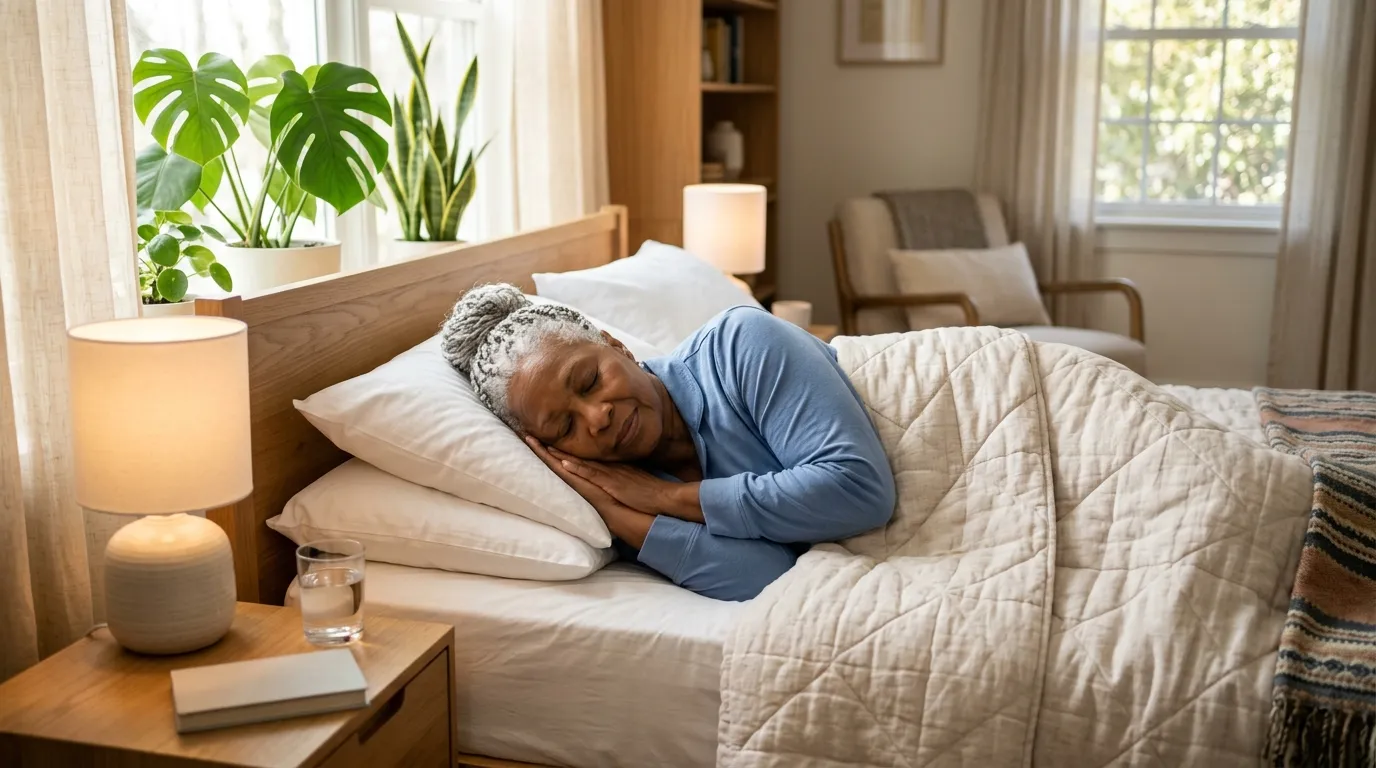
Navigating Sleep Changes as We Age
After more than two decades of treating sleep disturbances in older adults, I've learned that the question seniors ask most often is deceptively simple: "Should I take melatonin or tart cherry for better sleep?" Yet the answer requires understanding how your body's sleep biology shifts after 55.
Sleep becomes increasingly elusive in our later years. According to the National Institute on Aging (NIA), approximately 26% of adults aged 65 and older experience insomnia symptoms. This isn't just frustration—it's a biological reality. Your pineal gland gradually produces less melatonin. Your circadian rhythm drifts. Joint discomfort interrupts your deep sleep cycles. And nighttime awakenings become the norm rather than the exception.
The good news? You don't need habit-forming prescription sedatives to reclaim restorative sleep. But choosing between natural alternatives—tart cherry extract and melatonin supplements—requires evidence-based guidance tailored to aging bodies.
The Core Question: Are you struggling to fall asleep, or to stay asleep? Your answer determines which solution serves you best.
Why Older Adults Experience Sleep Disruptions
The Natural Decline of Melatonin Production
The American Academy of Sleep Medicine (AASM) has documented a troubling trend: melatonin production declines by approximately 50% between age 20 and age 70. This isn't a defect—it's a normal part of aging. Your pineal gland, the pea-sized structure deep in your brain responsible for producing melatonin, gradually calcifies. Your circadian rhythm—the internal 24-hour clock that governs sleep-wake cycles—shifts earlier, making you naturally drowsy by 8 p.m. and waking at 4 a.m.
For many seniors, this shift feels like a betrayal. You're tired at dinner but wired at midnight. Your body's natural sleep signal weakens precisely when you need it most.
The Risk of Morning Grogginess and Falls
Here's where the stakes become serious: according to the CDC, falls are the leading cause of injury in adults 65 and older, with one fall occurring every 11 seconds. Morning grogginess from sleep aids—whether prescription or over-the-counter—increases fall risk by impairing balance, reaction time, and cognitive clarity.
This is why the Mayo Clinic warns against high-dose synthetic sleep aids in older populations. A lingering sedative effect isn't just uncomfortable; it's dangerous. When you're choosing between melatonin and tart cherry, you're not just choosing between sleep aids—you're choosing between safety profiles.
Melatonin Supplements: Benefits, Risks, and Dosage for Seniors
How Melatonin Works in Older Bodies
Melatonin is not a sedative. This is the most important distinction I make with my senior patients. Melatonin is a hormone that signals your body that darkness has arrived—it's a chronobiotic, not a knockout drug. When you take a melatonin supplement, you're essentially saying to your brain: "It's time to sleep now."
In younger adults, this signal is powerful and precise. In older adults, the system is slower. Your aging brain takes longer to respond. Your metabolism processes melatonin more slowly, meaning it lingers in your system longer—sometimes into the morning hours.
The Pros and Cons of Melatonin for Seniors
Pros of Melatonin:
- Highly effective for circadian rhythm disorders (jet lag, shift work disruption)
- Helps reset your internal clock if you're naturally waking too early
- Useful for diagnosed melatonin deficiency (confirmed via clinical testing)
- Rapid onset (30–60 minutes) if you need quick sleep initiation
- Generally affordable and widely available
Cons of Melatonin for Seniors:
- High doses (>1–3 mg) frequently cause morning "hangover" and grogginess—increasing fall risk
- Can trigger vivid, sometimes disturbing dreams by altering REM sleep cycles
- Potential interactions with blood pressure medications, diabetes drugs, and anticoagulants (per Mayo Clinic guidance)
- Doesn't address underlying causes of fragmented sleep (joint pain, anxiety, nocturia)
- Long-term safety in seniors aged 75+ remains understudied
Ideal Dosage Recommendations for Adults 55+
Based on clinical evidence from the NIA and AASM, seniors should start low and go slow. The standard recommendation is 0.5 mg to 1 mg taken 1–2 hours before your target bedtime. Many over-the-counter melatonin bottles contain 3–10 mg per tablet—far more than most older adults need. In fact, research suggests that doses above 1 mg offer no additional benefit for sleep onset in seniors and significantly increase the risk of morning residual effects.
If you're considering melatonin, ask your pharmacist to help you find a low-dose formulation (0.5 mg or 1 mg tablets), or request a compounded prescription from your doctor for micro-dosing.
Tart Cherry: Nature's Dual-Action Sleep Aid
How Tart Cherry Juice and Extract Support Sleep
Tart cherry (Prunus cerasus) is not a pharmaceutical intervention—it's a whole-food nutrient source that happens to support sleep through multiple biological pathways. Unlike synthetic melatonin, tart cherry contains naturally occurring melatonin plus a class of compounds called procyanidins.
Here's the elegant part: procyanidins inhibit the enzyme that breaks down tryptophan, the amino acid your body uses to manufacture serotonin and melatonin. In other words, tart cherry doesn't just add melatonin to your system—it helps your body preserve and utilize the melatonin you naturally produce. It's a gentle amplification rather than a replacement.
Research published in the Journal of Medicinal Food found that adults consuming tart cherry juice concentrate showed measurable improvements in sleep duration and quality within 7–14 days, with benefits continuing to accumulate over time.
Added Health Benefits for Older Adults
Beyond sleep, tart cherry offers anti-inflammatory properties that matter deeply for aging bodies. Chronic inflammation is implicated in joint stiffness, muscle soreness, and delayed recovery from physical activity. For seniors managing arthritis, gout, or post-exercise soreness, tart cherry's natural anthocyanins provide dual benefits: better sleep and reduced joint discomfort.
This is particularly valuable because poor sleep and chronic pain create a vicious cycle in older adults. Pain disrupts sleep; poor sleep lowers pain tolerance. Tart cherry addresses both simultaneously.
Considerations for Seniors Taking Tart Cherry
Not all tart cherry products are created equal. Tart cherry juice can contain 20–25 grams of sugar per 8-ounce glass—problematic for seniors with Type 2 diabetes or prediabetes. The solution: choose standardized tart cherry extract capsules, which deliver the active compounds without the sugar burden.
There's one more consideration: timing. Drinking tart cherry juice late in the evening may increase nocturia (frequent nighttime urination), a common complaint in older adults. If bladder control is already an issue, take your tart cherry extract capsule with dinner rather than as a bedtime beverage.
Head-to-Head Comparison: Which Is Best for You?
Comparison Matrix
| Feature | Melatonin Supplements | Tart Cherry (Juice/Extract) |
|---|---|---|
| Primary Mechanism | Direct hormone replacement | Enhances natural melatonin production |
| Speed of Action | Fast (30–60 minutes) | Gradual (7–14 days to full effect) |
| Morning Grogginess Risk | Moderate to High (if dose >1 mg) | Extremely Low |
| Secondary Health Benefits | Minimal | Anti-inflammatory, joint support |
| Senior Safety Rating | High (at low doses <1 mg) | Very High (extract form preferred) |
| Drug Interactions | Possible with antihypertensives, anticoagulants | Minimal; generally safe with medications |
| View details → | View details → |
Falling Asleep vs. Staying Asleep
Here's the clinical distinction that matters most: melatonin excels at sleep onset; tart cherry excels at sleep maintenance and quality.
If your primary complaint is "I lie awake for 45 minutes before finally drifting off," melatonin's rapid action (30–60 minutes) addresses your specific problem. Low-dose melatonin (0.5–1 mg) can effectively reset your sleep onset window.
If your complaint is "I fall asleep fine, but I wake up three times a night" or "I wake up exhausted despite 8 hours in bed," you're dealing with fragmented sleep or poor sleep quality. This is where tart cherry shines. Its compounds support deeper, more continuous sleep cycles and enhance REM sleep quality—the restorative stage where your brain consolidates memories and processes emotions.
Drug Interactions and Long-Term Safety
According to Mayo Clinic research, melatonin can interact with:
- Blood pressure medications (ACE inhibitors, beta-blockers)
- Anticoagulants (warfarin, dabigatran)
- Diabetes medications (metformin, sulfonylureas)
- Sedative medications (benzodiazepines, sleep aids)
Tart cherry extract, by contrast, has minimal documented interactions. Its anti-inflammatory compounds are gentle and work synergistically with most medications. However, if you're on anticoagulants, consult your doctor—tart cherry's mild antiplatelet properties are generally negligible but worth confirming with your healthcare provider.
💡 Expert Tip: Before starting any sleep supplement—whether melatonin, tart cherry, or a combination formula—bring a complete list of your current medications to your pharmacist or doctor. They can screen for interactions specific to your health profile and recommend the safest option for your individual situation.
Beyond Single Ingredients: Multi-Nutrient Sleep Formulations
Why Single Ingredients Sometimes Fall Short for Seniors
Many older adults discover that melatonin alone helps them fall asleep but doesn't address the underlying causes of fragmented sleep. Similarly, tart cherry supports quality but may not help someone with severe onset insomnia. This is where comprehensive, multi-ingredient formulations enter the picture.
Complex sleep issues in seniors rarely have single-ingredient solutions. You might be dealing with:
- Anxiety that keeps your mind racing (requires L-theanine or magnesium)
- Physical restlessness or muscle tension (requires valerian or passionflower)
- Circadian misalignment (requires low-dose melatonin)
- Inflammation-driven sleep fragmentation (requires tart cherry or turmeric)
A thoughtfully formulated blend addresses multiple pathways simultaneously, offering more comprehensive support than any single ingredient can provide.
Clinical Evaluation: Relaxium Sleep
Relaxium Sleep represents a modern approach to senior sleep support—a physician-formulated blend designed specifically to avoid the pitfalls of single-ingredient supplements while maintaining safety for aging bodies.
How It Works: Relaxium Sleep combines natural ingredients (including melatonin, magnesium, L-theanine, and herbal extracts) in micro-doses calibrated for older adults' slower metabolism. Rather than