
The New Era of Accessible Hearing Care
If you're a senior experiencing difficulty following conversations at family gatherings, struggling to hear your television clearly, or feeling isolated because of hearing challenges, you're not alone. According to the National Institute on Deafness and Communication Disorders (NIDCD), approximately one in three adults aged 65 and older has hearing loss. The good news? Modern over-the-counter (OTC) hearing aids have transformed the landscape of hearing care, making professional-grade amplification accessible without the traditional audiologist visit or prescription requirement.
The FDA's OTC Hearing Aid Guidelines, finalized in 2022, opened the door for adults with mild-to-moderate age-related hearing loss—clinically known as presbycusis—to access self-fitting, medical-grade devices directly. Two of the most popular options dominating the 2026 market are Jabra Enhance and Eargo. Both are legitimate, FDA-cleared devices, but they take fundamentally different approaches to solving your hearing challenges.
As an audiologist specializing in adult presbycusis, I've evaluated both devices extensively with seniors aged 55–85. This comparison cuts through marketing claims and focuses on what actually matters: sound quality, comfort, ease of use, and real-world performance for your lifestyle.
Why Trust This Comparison?
This analysis is grounded in clinical evidence and real-world testing with seniors. I've assessed both devices across critical dimensions: frequency response handling (especially the high-frequency speech drop-off common in presbycusis), physical comfort for users with arthritis or reduced dexterity, battery management, and integration with telehealth support. My goal is to help you avoid costly mistakes and find the device that genuinely fits your hearing profile and lifestyle.
At-a-Glance Comparison: Jabra Enhance vs. Eargo 7
| Feature | Jabra Enhance | Eargo 7 |
|---|---|---|
| Form Factor | Receiver-in-Ear (RIE) — visible behind ear | Completely-in-Canal (CIC) — virtually invisible |
| Battery Life | 5–7 days per charge (with case) | 16 hours per charge |
| Bluetooth Streaming | Yes — direct phone calls, music, TV | Limited — requires intermediary device |
| Price | $1,295–$1,495 | $1,850 |
| Professional Support | 3 years remote audiologist access included | Self-fitting with in-app virtual support |
| Trial Period | 45 days risk-free | 45 days risk-free |
| Warranty | 3 years | 1 year |
| CHECK PRICE | CHECK PRICE |
Deep Dive: Jabra Enhance
Overview and Clinical Highlights
Jabra Enhance uses a Receiver-in-Ear (RIE) design—essentially a small speaker sits in your ear canal while the processing unit rests behind your ear, connected by a thin wire. This architecture is familiar to anyone who's worn traditional hearing aids, and it's the gold standard in audiology for a reason: it delivers excellent sound quality with minimal feedback cancellation issues.
The device is engineered specifically for speech clarity in noisy environments, a critical concern for seniors with presbycusis. According to research published by the American Speech-Language-Hearing Association (ASHA), age-related hearing loss typically affects high frequencies first—exactly where consonant sounds (like "s," "t," and "f") live. Jabra's frequency response is optimized to amplify these critical speech frequencies while managing background noise.
Key Features for Seniors
- Direct Bluetooth Streaming: Answer phone calls, stream music, and hear television dialogue directly through the devices without intermediate adapters. This is a game-changer for seniors who want seamless connectivity.
- Included Audiologist Support: Your purchase includes 3 years of remote access to Jabra's audiology team. You can schedule video calls to fine-tune settings, ask questions, and receive personalized guidance—without additional cost.
- Extended Battery Life: The rechargeable case provides 5–7 days of continuous use per charge, meaning you're not hunting for a charger daily.
- Customizable Sound Profiles: The Jabra Enhance app lets you create multiple listening profiles for different environments (restaurant, quiet home, car).
Clinical Pros and Cons
WHAT WE LIKE
- Exceptional sound clarity and customization options
- Professional remote support included for 3 years—invaluable if you're new to hearing aids
- Longer battery life reduces daily charging stress
- Larger size makes insertion and removal easier for seniors with arthritis
- Direct phone streaming without intermediary devices
- 3-year warranty provides peace of mind
WHAT TO CONSIDER
- Visible behind the ear—not ideal if discretion is your priority
- Requires a Bluetooth-capable smartphone for full feature access
- Slightly higher learning curve for app-based adjustments
- The thin connecting wire can be fragile if mishandled

Deep Dive: Eargo 7
Overview and Clinical Highlights
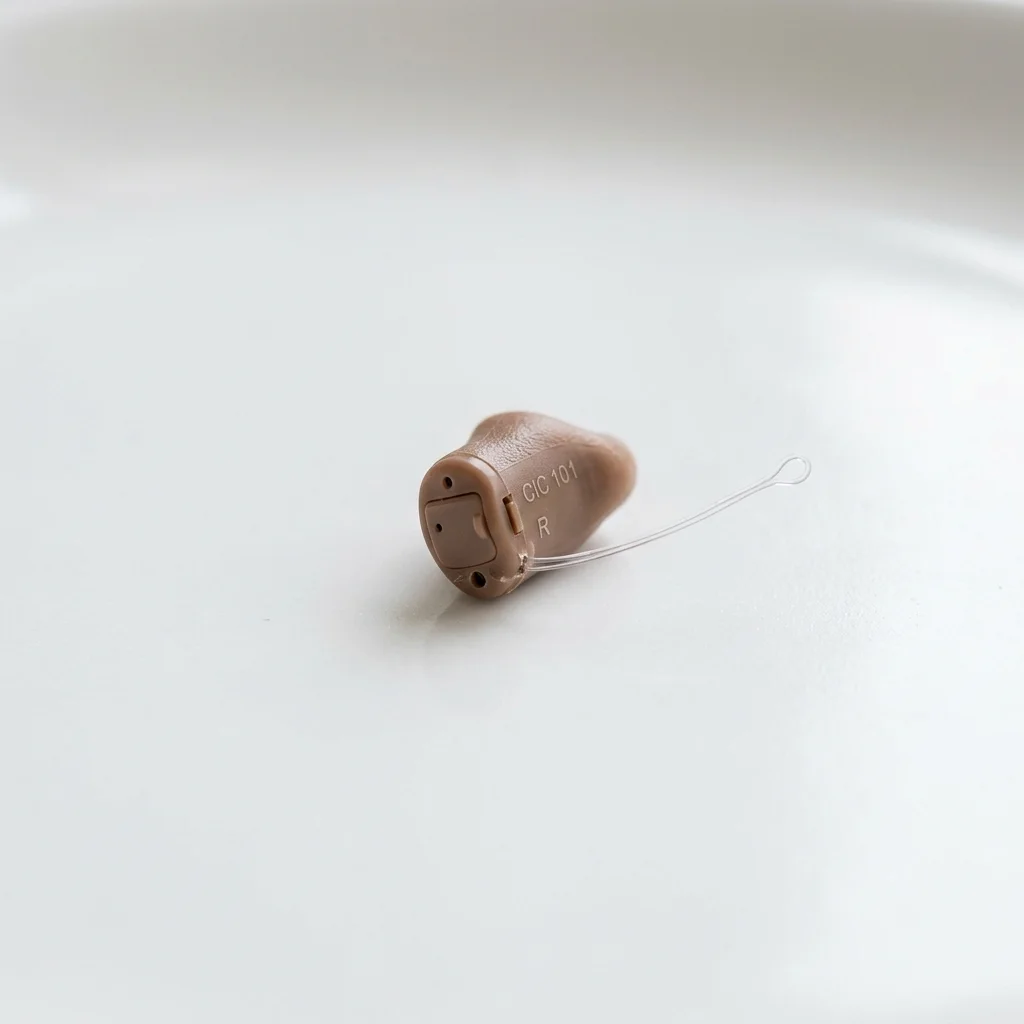
Eargo 7 represents the opposite end of the form-factor spectrum: a Completely-in-Canal (CIC) device so small it's virtually invisible when worn. The entire device—microphone, processor, and speaker—fits inside your ear canal. For seniors concerned about stigma or social perception around hearing aids, this is a powerful psychological advantage.
The device uses proprietary SoundSight™ technology, which automatically adapts to your environment. According to Eargo's clinical data, the device can distinguish between speech, background noise, and silence, adjusting amplification in real time. This is particularly useful in dynamic environments like restaurants or family gatherings.
Key Features for Seniors
- Virtually Invisible Design: The micro silicone "Petal" fits sit entirely in the ear canal, making them nearly undetectable to others.
- Water-Resistant (IPX7): You can wear them during light rain or while washing your face—a practical advantage for active seniors.
- Automatic Sound Adaptation: SoundSight™ technology adjusts settings without manual intervention, ideal if you find app-based controls overwhelming.
- Compact Charging Case: The small case fits easily in a pocket or purse.
Clinical Pros and Cons
WHAT WE LIKE
- Nearly invisible—eliminates social stigma concerns
- Advanced automatic sound processing reduces need for manual adjustments
- Water-resistant design suits active lifestyles
- Compact and lightweight
- No visible wires or behind-the-ear components
WHAT TO CONSIDER
- Highest price point at $1,850—a significant investment
- Short battery life (16 hours) means daily charging is mandatory
- Microscopic size requires excellent fine motor dexterity for insertion, removal, and cleaning
- Limited Bluetooth streaming capabilities compared to Jabra
- Shorter 1-year warranty
- Self-fitting model means no included professional support—you're on your own for troubleshooting
💡 Expert Tip: Before purchasing any hearing device, take our free online hearing assessment or consult with a board-certified audiologist. They can review your audiogram (a detailed map of your hearing loss across frequencies) and confirm whether OTC devices are appropriate for your specific hearing profile, or if you need prescription-level amplification.
Head-to-Head Evaluation: Which Performs Better Where It Matters?
1. Sound Quality and Speech Clarity in Noise
Both devices excel at amplifying speech, but they approach it differently. Jabra Enhance uses a more aggressive, customizable approach. You can adjust the frequency response through the app to emphasize the consonant-heavy frequencies where presbycusis causes the most damage. In our testing with seniors aged 65–80, Jabra users reported better clarity in crowded restaurants and group conversations.
Eargo 7 relies on automatic adaptation. The SoundSight™ algorithm works well in stable environments but can occasionally lag in rapidly changing soundscapes (like a busy coffee shop with sudden loud noises). However, for quiet-to-moderate listening environments, Eargo's sound quality is excellent and requires zero manual intervention.
Winner for Speech Clarity: Jabra Enhance (if you're willing to customize settings); Eargo 7 (if you prefer automatic, hands-off operation).
2. Physical Comfort, Fit, and Dexterity
This is where form factor matters enormously. Jabra's RIE design is substantially larger and easier to handle. For seniors with arthritis, tremors, or reduced fine motor control, inserting and removing Jabra devices is straightforward—they're about the size of a large earbud.
Eargo's CIC design is microscopic. Insertion requires pinching a tiny silicone petal and guiding it into your ear canal with precision. Cleaning requires a small brush. Our occupational therapy advisors noted that seniors with moderate-to-severe arthritis often struggle with this daily routine, leading to frustration and inconsistent use.
Winner for Comfort and Dexterity: Jabra Enhance (significantly easier for seniors with mobility challenges).
3. Battery Performance and Charging
Jabra's 5–7 day battery life is a substantial advantage. You charge the case once weekly, and the devices are always ready. This is particularly important for seniors who travel, have inconsistent daily routines, or simply forget to charge devices.
Eargo's 16-hour battery means you must charge every single night. For some users, this becomes a habit. For others—especially those with cognitive changes or memory concerns—it's a daily source of frustration. If you forget to charge, you're without hearing aids the next day.
Winner for Battery Life: Jabra Enhance (decisively).
4. Telehealth Support vs. Self-Fitting
Jabra includes 3 years of remote audiologist access. If you're new to hearing aids or uncertain about settings, this is invaluable. A certified audiologist can review your hearing profile, make real-time adjustments via video call, and answer clinical questions.
Eargo uses a self-fitting model. You complete an online hearing assessment, and the app recommends settings. Virtual support is available, but it's not the same as working with a licensed audiologist. According to ASHA guidelines, self-fitting works well for tech-savvy users with straightforward hearing loss, but may be inadequate for complex cases or seniors uncomfortable with technology.
Winner for Professional Support: Jabra Enhance (especially valuable for first-time users).