
Waking up at 3:00 AM, staring at the ceiling, and dreading the heavy, sluggish fog of the morning ahead is an all-too-familiar routine for millions of older adults. According to the National Institute on Aging (NIA), nearly half of adults aged 65 and older report chronic sleep disturbances, ranging from frequent nocturnal awakenings to unrefreshing light sleep. As our bodies age, the architecture of our rest undergoes profound physiological shifts: slow-wave deep sleep decreases, pineal calcification diminishes our natural hormonal output, and our internal circadian clocks often shift earlier.
Glycine vs Melatonin for Senior Sleep: Full Guide (2026)
Comparing glycine vs melatonin for older adults. Discover which sleep aid prevents next-day grogginess, supports sleep architecture, and avoids drug clashes.
By SeniorEaseGuide Research Editorial•✓ Evidence-Based•Updated Nov 15, 2026• 12 min read
Listen to this article
0:00 / 0:00Table of Contents (15 sections)
- • 🌿 What Is Glycine? The Thermoregulatory Amino Acid
- • 🌙 What Is Melatonin? The Chronobiotic Hormone
- • ⚖️ Glycine vs Melatonin: Active Clinical Comparison
- • 🛌 Sleep Architecture & The Morning "Hangover"
- • 💊 Senior Usability: Swallowing, Dexterity, and Taste
- • ⚠️ Polypharmacy, Drug Interactions, and Medical Warnings
- ↳ ⚠️ Glycine Safety Considerations
- ↳ ⚠️ Melatonin Safety Considerations
- • 📊 SeniorEase Score™: Head-to-Head Ratings
- • 💡 The Clinical Verdict: Which Should You Choose?
- • ❓ Frequently Asked Questions (FAQ)
- ↳ 🌙 Does glycine cause morning drowsiness like over-the-counter sleep aids?
- ↳ 🔹 Can I take glycine if I have diabetes or prediabetes?
- ↳ 🌙 Why do high doses of melatonin make my sleep worse after a few weeks?
- ↳ 🌙 What is the best way to take glycine powder for sleep?
📋 Senior Quick-Action Protocol & Checklist
To put the clinical guidance above into immediate practice, our geriatric research team outlines this evidence-based protocol for restorative sleep & cervical alignment protocol:
- ✔Step 1 (Cervical Spine Leveling): Align your neck horizontally using an Adjustable Loft Ergonomic Pillow or orthopedic Cervical Memory Foam Pillow to eliminate morning neck stiffness.
- ✔Step 2 (Bedroom Thermal Window): Keep ambient temperature at 65°F–68°F paired with breathable Cooling Bamboo Sheets to facilitate deep restorative delta sleep.
- ✔Step 3 (Restorative Mineral Wind-Down): Consider gentle sleep relaxation with Magnesium Glycinate 400mg 45 minutes before bedtime to prevent midnight muscle tension.
For decades, the standard medicine-cabinet response has been a bottle of over-the-counter melatonin. Yet for many seniors, standard commercial melatonin brings unwanted baggage: vivid nightmares, morning disorientation, and a lingering lethargy that significantly elevates the risk of early-morning falls. Today, geriatric sleep researchers and integrative practitioners are increasingly turning their attention to an alternative metabolic compound: glycine. This naturally occurring, non-hormonal amino acid encourages sleep through thermal regulation—lowering core body temperature—rather than hormonal sedation.
In this comprehensive clinical guide, we analyze the biological mechanisms, sleep-architecture impacts, morning hangover risks, and drug interaction profiles of glycine versus melatonin to help you and your physician determine which option provides safer, deeper rest.
To evaluate these two sleep aids, we must first examine why sleep deteriorates after age 55. Age-related insomnia is rarely a simple case of "not feeling tired." Instead, it is driven by distinct biological changes:
- 👉 Pineal Gland Calcification: By age 60, the pineal gland produces significantly less endogenous melatonin than it did in young adulthood, blunting the body’s natural biochemical signal that nighttime has arrived.
- 👉 Blunted Thermoregulation: Falling asleep requires the body’s core temperature to drop by roughly 1 to 2 degrees Fahrenheit. In older adults, autonomic vascular dilation in the hands and feet is often sluggish, delaying this essential nocturnal cooling process.
- 👉 Loss of Stage N3 (Slow-Wave) Sleep: Deep, restorative slow-wave sleep naturally declines with age, leaving seniors spending disproportionate time in lighter Stage N1 and N2 sleep, making them highly susceptible to waking from ambient noise, joint pain, or nocturia.
🌿 What Is Glycine? The Thermoregulatory Amino Acid
Glycine is the simplest non-essential amino acid in the human body, acting as an inhibitory neurotransmitter in the central nervous system and a fundamental building block for collagen, enzymes, and glutathione. Unlike sleeping pills or synthetic sedatives, glycine does not "knock you out."
The primary mechanism through which glycine promotes sleep involves the suprachiasmatic nucleus (SCN)—the brain’s master circadian pacemaker. When taken before bed, glycine binds to NMDA receptors in the SCN, triggering peripheral vasodilation. It relaxes microvascular blood vessels in the extremities (hands and feet), drawing heat away from your core and radiating it outward.
This rapid drop in core body temperature directly mirrors the natural evolutionary trigger for sleep onset. Clinical trials demonstrate that 3 grams of pure glycine powder taken approximately 30 to 60 minutes before bedtime significantly shortens sleep latency, stabilizes sleep efficiency, and enhances subjective morning freshness without distorting normal sleep stages.
🌙 What Is Melatonin? The Chronobiotic Hormone
Melatonin is an endocrine hormone produced by the pineal gland in response to darkness. It is technically classified as a chronobiotic—an agent capable of shifting or entraining the phase of the biological clock—rather than a traditional hypnotic sedative.
When you take exogenous melatonin, it binds to MT1 and MT2 G-protein-coupled receptors in the brain, signaling to your body that it is biological night. For older adults with demonstrably low melatonin output or those suffering from phase-advanced sleep syndromes (falling asleep at 7:00 PM and waking at 3:00 AM), low-dose supplementation can help reset the circadian schedule.
However, modern commercial dosing has created widespread problems. Most retail pharmacies sell melatonin in 5 mg, 10 mg, or even 12 mg tablets. For a senior whose hepatic clearance rates have slowed, these massive doses saturate receptors for hours past sunrise, producing intense morning "sleep drunkenness," impaired balance, and blunted daytime alertness.
⚖️ Glycine vs Melatonin: Active Clinical Comparison
The following table outlines the physiological, practical, and safety differences between glycine and melatonin for adults over 55:
| Parameter | Glycine | Melatonin |
|---|---|---|
| Compound Class | Non-essential Amino Acid / Inhibitory Neurotransmitter | Neurohormone / Endocrine Chronobiotic |
| Primary Mechanism | Lowers core body temp via peripheral vasodilation; calms NMDA signaling | Agonizes MT1/MT2 receptors to signal biological night |
| Impact on Sleep Architecture | Stabilizes N3 slow-wave sleep; does not suppress REM; smooth sleep cycles | Reduces sleep latency; excessive doses can cause fragmented REM / vivid dreams |
| Next-Day Grogginess Risk | Very Low: Rapidly cleared; subjects routinely report greater morning alertness | Moderate to High: Especially with standard >1 mg commercial retail doses |
| Effective Senior Dosage | 3 grams (3,000 mg) taken 30–60 min before bed | 0.3 mg to 1.0 mg (physiologic micro-dose) |
| Administration Form | Soluble, sweet powder or large capsules (powder preferred) | Sublingual drops, chewable tablets, or micro-tablets |
| Fall Risk Hazard | Minimal; no direct psychomotor or balance impairment | Elevated during nighttime bathroom visits if dose is high |
🛌 Sleep Architecture & The Morning "Hangover"
The primary complaint seniors express regarding commercial sleep supplements is waking up feeling drugged. This residual cognitive impairment is not just unpleasant—it is dangerous. The Centers for Disease Control and Prevention (CDC) notes that falls are the leading cause of injury-related death among adults 65 and older, with early-morning disorientation and nocturia (nighttime urination) playing major roles.
Melatonin clearance depends heavily on the liver’s cytochrome P450 enzyme CYP1A2. In older adults, hepatic blood flow and enzyme activity decrease noticeably. When an older adult consumes a standard 5 mg tablet of melatonin, circulating blood levels remain artificially elevated well into the mid-morning hours, inducing grogginess, brain fog, and postural instability.
Glycine operates on a completely different metabolic pathway. As an endogenous amino acid, it has a rapid plasma clearance half-life. Rather than heavily sedating the central nervous system, glycine optimizes the natural progression into non-REM Stage 3 restorative sleep. Human polysomnography studies show that glycine does not alter the percentage of REM sleep, nor does it suppress the natural oscillatory rhythms of the brain. When subjects awaken after taking 3 grams of glycine, neurocognitive testing confirms superior wakefulness, faster reaction times, and an absence of residual fatigue.
💊 Senior Usability: Swallowing, Dexterity, and Taste
An often-overlooked barrier to consistent supplement use in older adults is capsule burden and physical dexterity. For individuals living with mild osteoarthritis, opening child-resistant blister packs can cause genuine joint pain. Furthermore, age-related dysphagia (difficulty swallowing) makes taking multiple large pills an anxiety-inducing chore.
Here, glycine offers a distinct practical advantage:
- ✔ Natural Sweet Taste: The name glycine comes from the Greek word glykys, meaning sweet. The raw powder has a mild, pleasant sweetness roughly 70% as sweet as table sugar, with zero glycemic impact.
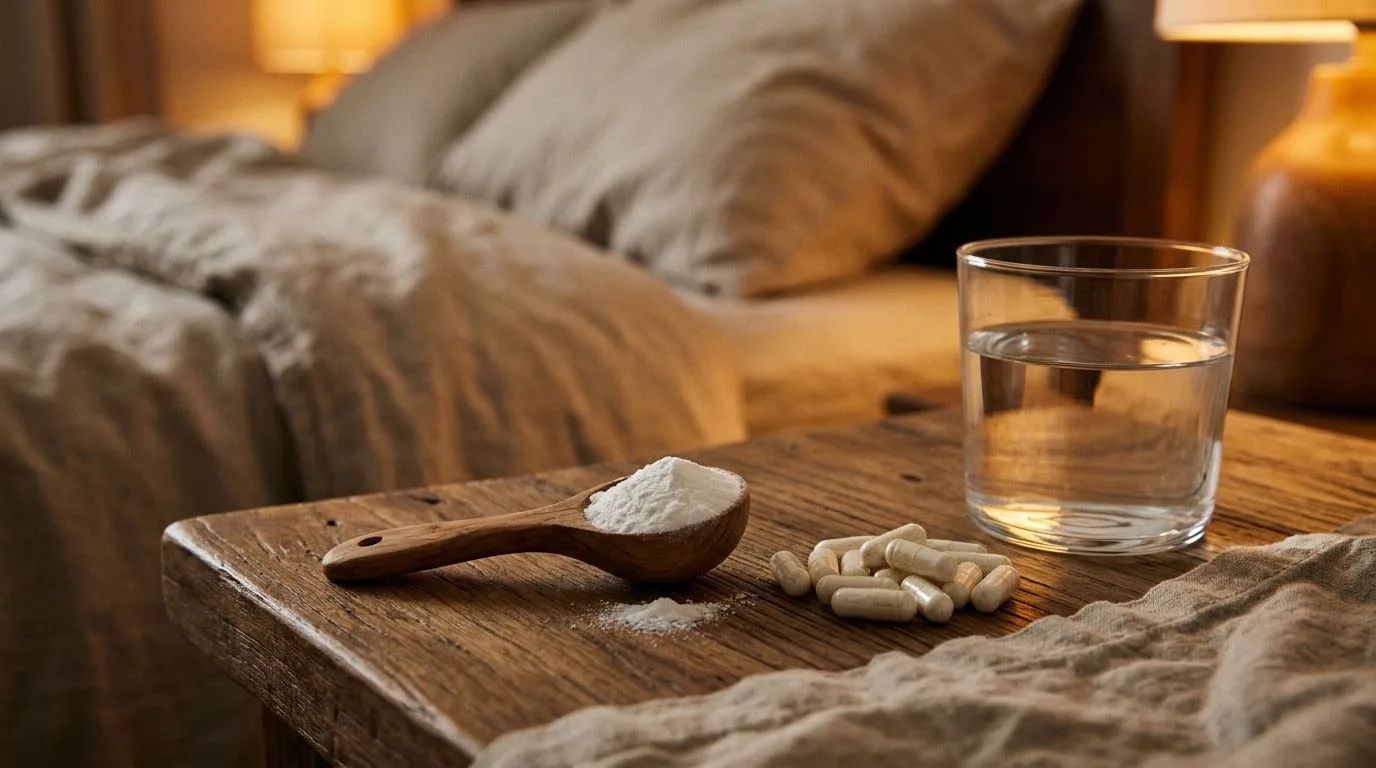
- ✔ Pill-Free Administration: Seniors do not need to swallow three or four massive horse pills. A single 3-gram scoop of bulk glycine dissolves effortlessly in warm decaffeinated chamomile tea, a small glass of water, or even a spoonful of unsweetened applesauce.
- ✔ Melatonin Delivery Considerations: If melatonin is chosen, older adults should bypass standard swallowing tablets in favor of micro-dosed liquid droppers or tiny sublingual dissolve tablets (300 mcg / 0.3 mg), which enter the bloodstream through the oral mucosa and eliminate swallowing difficulties.
⚠️ Polypharmacy, Drug Interactions, and Medical Warnings
According to data from the National Institutes of Health (NIH), nearly 40% of older Americans take five or more prescription medications concurrently. Introducing unvetted sleep aids into a complex medication regimen requires extreme caution.
⚠️ Glycine Safety Considerations
Glycine is remarkably well-tolerated because the body synthesizes it daily and processes it from dietary proteins. However, seniors should be aware of a few specific nuances:
- 👉 Antipsychotic Interactions: Glycine can interact with certain atypical antipsychotic medications, notably Clozapine, potentially reducing the drug's therapeutic effectiveness.
- 👉 Gastrointestinal Tolerance: While 3 grams is standard and gentle, consuming more than 10 grams in a single sitting can provoke mild stomach upset or loose stools.
- 👉 Blood Pressure Effects: Because glycine promotes peripheral vasodilation, it can gently lower blood pressure. While usually beneficial, seniors taking multiple antihypertensive medications should monitor their blood pressure when initiating therapy.
⚠️ Melatonin Safety Considerations
Because melatonin is an active hormone, its potential for pharmacological clashes is significantly higher:
- ⚠️ Anticoagulants and Antiplatelets: Melatonin can inhibit platelet aggregation and interact with blood thinners like Warfarin (Coumadin), Eliquis, or daily aspirin regimens, potentially increasing bruising or bleeding events.
- ⚠️ Blood Pressure Medications: Melatonin can interfere with nocturnal blood pressure control and blunt the effectiveness of certain calcium channel blockers and ACE inhibitors.
- ⚠️ Blood Sugar Management: Melatonin suppresses insulin secretion from the pancreas. Taking high-dose melatonin right after dinner or before bed can worsen evening insulin sensitivity in individuals with Type 2 diabetes.
- ⚠️ Autoimmune Conditions: As an immune-system stimulator, melatonin may exacerbate rheumatoid arthritis, lupus, or other autoimmune conditions common in aging populations.
📊 SeniorEase Score™: Head-to-Head Ratings
Our editorial clinical review evaluates both compounds across four core domains vital to older adults:
🔹 Glycine (Overall SeniorEase Score™: 9.3 / 10)
- ✔ Clinical Evidence (Deep Sleep Architecture): 9.2/10 – Strong human trial data confirming enhanced slow-wave sleep and improved morning alertness.
- ✔ Ease of Administration & Swallowing: 9.6/10 – Naturally sweet powder dissolves completely in liquids, eliminating capsule dysphagia.
- ✔ Safety & Polypharmacy Compatibility: 9.4/10 – Non-hormonal, non-habit forming, with minimal prescription drug interactions.
- ✔ Value for Money: 9.0/10 – Inexpensive bulk powders provide months of nightly doses for pennies per serving.
🔹 Melatonin (Overall SeniorEase Score™: 7.8 / 10)
- ✔ Clinical Evidence (Circadian Entrainment): 8.8/10 – Excellent for phase shift and initial sleep onset, but poor for sleep maintenance.
- ✔ Ease of Administration: 8.2/10 – Widely available in small dissolvable formats, but high-dose pills cause confusion.
- ✔ Safety & Polypharmacy Compatibility: 6.8/10 – Interacts with blood thinners, blood pressure, and diabetes medications; carries hangover fall risk.
- ✔ Value for Money: 7.5/10 – Widely affordable, but consumers routinely purchase inappropriately high doses.
💡 The Clinical Verdict: Which Should You Choose?
When weighing glycine against melatonin, the optimal choice depends on the specific nature of your sleep disturbance:
Choose Glycine if: You struggle with waking up throughout the night, feel heavy and unrefreshed in the mornings, want to protect your balance and fall-risk profile, take multiple prescription medications, or experience difficulty swallowing capsules. A single 3-gram scoop of high-purity glycine powder stirred into an evening herbal tea provides a gentle, non-hormonal path to deeper restorative sleep.
Choose Melatonin if: Your primary problem is jet lag, shift work, or an overt circadian phase disorder—meaning your body does not register that it is nighttime until 2:00 AM. If choosing melatonin, bypass retail 5 mg or 10 mg mega-tablets. Instead, utilize a physiological micro-dose of 0.3 mg (300 mcg) to 1.0 mg taken 90 minutes before bed to gently signal sleep onset without receptor desensitization.
Can they be combined? In clinical practice, some older adults find exceptional relief by pairing a low-dose physiological melatonin (300 mcg) to set the circadian clock, alongside 3 grams of glycine to lower body temperature and anchor deep slow-wave sleep. Always consult your personal physician or geriatric pharmacist before combining sleep-modulating compounds.
❓ Frequently Asked Questions (FAQ)
🌙 Does glycine cause morning drowsiness like over-the-counter sleep aids?
No. Clinical trials show that glycine actually reduces morning fatigue and improves daytime cognitive functioning. Unlike sedative antihistamines or high-dose melatonin, glycine does not drug the central nervous system; it works by mimicking natural thermoregulatory cooling and is rapidly metabolized by morning.
🔹 Can I take glycine if I have diabetes or prediabetes?
Yes. Despite its naturally sweet flavor, pure glycine is an amino acid, not a simple carbohydrate, and does not spike blood glucose. In fact, several metabolic studies suggest that supplemental glycine can improve insulin sensitivity and support healthy glucose regulation in older adults.
🌙 Why do high doses of melatonin make my sleep worse after a few weeks?
Taking high doses (5 mg to 10 mg) floods the brain with far more hormone than the pineal gland ever produces naturally. Over time, this chronic saturation can cause MT1 and MT2 receptors to downregulate (become desensitized), leading to vivid nightmares, fragmented sleep cycles, and worse rebound insomnia when you stop.
🌙 What is the best way to take glycine powder for sleep?
Stir 3 grams (typically one level teaspoon or the included scoop) into roughly 4 to 6 ounces of warm water or caffeine-free herbal tea about 30 to 60 minutes before bed. Keep the fluid volume moderate so you do not increase nighttime trips to the bathroom.
Medical Disclaimer: The information provided in this guide is for educational purposes only and is not intended as personal medical advice. Always consult your physician, physical therapist, or qualified healthcare professional before beginning any new treatment, supplement, or mobility regimen.
Reviewed & Fact-Checked By

Sarah MitchellVerified Expert
Senior Care Researcher & Lead Editor
Sarah Mitchell is a dedicated senior care researcher and advocate with over 15 years of experience testing and reviewing products for older adults. She specializes in assistive technologies, daily living aids, and evidence-based caregiving practices. Full bio →
Master of Public Health (MPH) – Focus on AgingCertified Senior Advisor (CSA)Over 100+ Mobility Products Tested
Why You Can Trust Us
🔬 Testing Methodology
We independently evaluate products based on senior safety, ease of use, comfort, and value from hands-on analysis and research.
✍️ Editorial Process
Every article undergoes fact-checking, citing authoritative sources like the NIH, Mayo Clinic, and CDC for evidence-based accuracy.
⚕️ Medical Review Policy
Health content is reviewed by credentialed specialists, including gerontologists and physical therapists, to ensure clinical relevance.
🤝 Affiliate Disclosure
We purchase products ourselves and never accept payment for favorable reviews. Links may earn a commission at no extra cost to you.