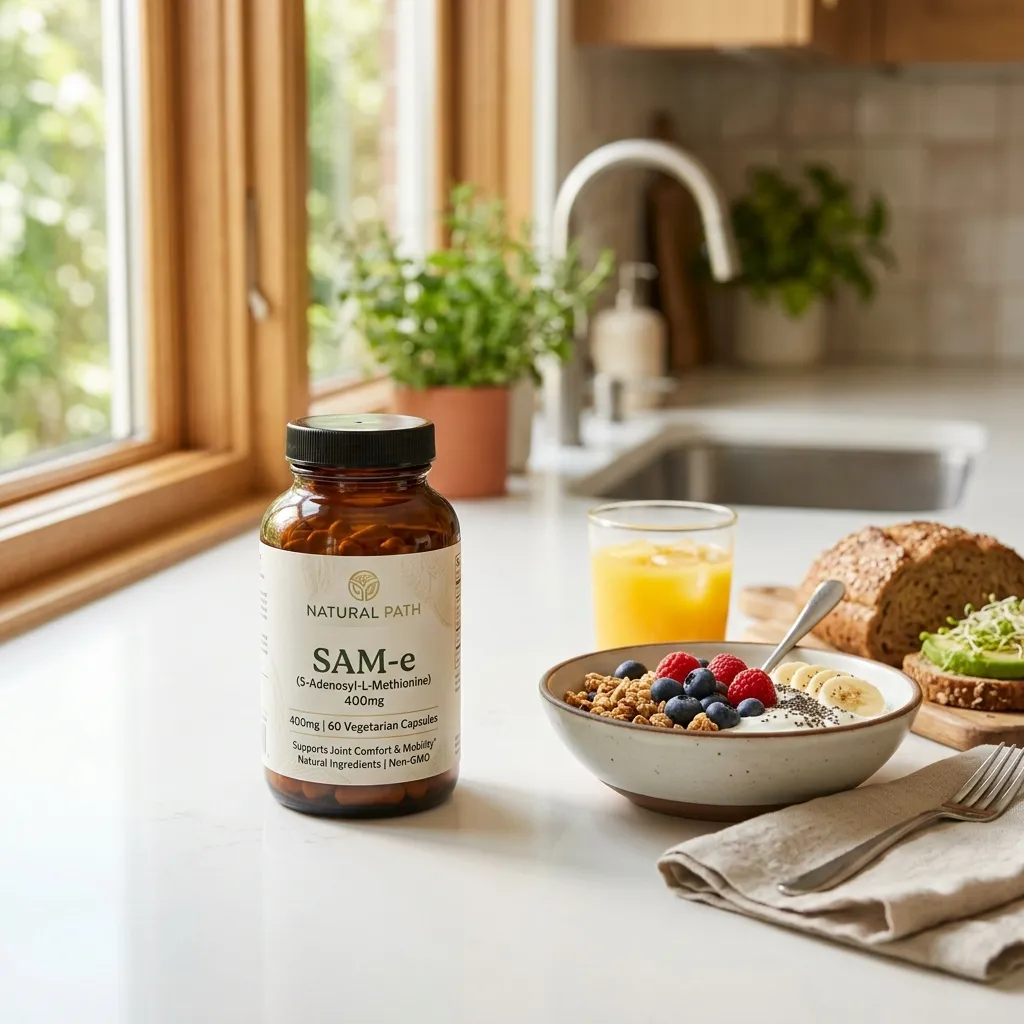
Living with joint pain is not inevitable — and for the 49.7% of adults aged 65 and older experiencing osteoarthritis-related discomfort, according to the Centers for Disease Control and Prevention, effective solutions exist beyond prescription medications. SAM-e (S-adenosyl methionine) has emerged as a promising therapeutic option for senior joint pain management, offering a different mechanism of action than traditional NSAIDs while potentially reducing systemic side effects.
This comprehensive review evaluates SAM-e from the perspective of orthopedic specialists and geriatric physical therapists, examining clinical evidence, safety profiles, dosing protocols, and how this supplement compares to both pharmaceutical and natural alternatives. You'll learn what the research actually shows, who benefits most from SAM-e supplementation, and whether this option makes sense for your specific situation.
What you'll discover in this guide: Evidence-based efficacy data, senior-specific dosing recommendations, potential drug interactions, comparative analysis with alternatives like curcumin and glucosamine, and a practical action plan for integrating SAM-e into your joint pain management strategy.
What Is SAM-e? Understanding the Basics
Definition and How SAM-e Works
S-adenosyl methionine (SAM-e) is a naturally occurring compound found in virtually every tissue and fluid in the human body. As a methyl donor, SAM-e participates in over 100 biochemical reactions, including those critical to cartilage synthesis and joint lubrication. According to research published in the Journal of Rheumatology, SAM-e contributes to the production of proteoglycans — the molecules that give cartilage its shock-absorbing properties.
The mechanism of action for joint pain relief involves multiple pathways. SAM-e stimulates chondrocyte production, the specialized cells responsible for maintaining healthy cartilage. It also demonstrates anti-inflammatory properties by modulating cytokine production, the signaling molecules that trigger inflammation in arthritic joints. Unlike NSAIDs that simply block pain signals, SAM-e may actually support the structural integrity of joint tissues.
Why SAM-e Matters for Aging Joints
Natural SAM-e production declines with age, creating a potential deficiency that coincides with the onset of osteoarthritis symptoms in many seniors. Based on clinical evidence from the National Institute of Arthritis and Musculoskeletal and Skin Diseases (NIAMS), this age-related decline in SAM-e levels correlates with reduced cartilage regeneration capacity and increased susceptibility to joint degradation.
For seniors experiencing morning stiffness, reduced range of motion, and chronic joint discomfort, supplementation aims to restore SAM-e to more youthful levels. The Arthritis Foundation notes that while SAM-e won't reverse severe cartilage loss, it may slow progression and improve functional capacity in mild to moderate osteoarthritis cases.
Clinical Evidence: Does SAM-e Really Work for Joint Pain?
What Research Shows
The clinical evidence supporting SAM-e for osteoarthritis management comes from multiple controlled trials. A meta-analysis published in Osteoarthritis and Cartilage examined 11 studies involving over 1,400 participants and found that SAM-e demonstrated comparable efficacy to NSAIDs for pain reduction, with significantly fewer gastrointestinal side effects — a critical consideration for seniors at higher risk for GI complications.
According to the Arthritis Foundation, research indicates that SAM-e supplementation at doses of 1,200 mg daily can reduce pain scores by approximately 30-40% after 4-8 weeks of consistent use. A landmark study from the University of California, Irvine, compared SAM-e to celecoxib (Celebrex) in 134 adults with knee osteoarthritis. While celecoxib provided faster initial relief, by the second month, both groups showed similar improvements in pain and functional capacity.
Expected timeline for results: Most clinical trials show initial improvements within 2-4 weeks, with maximum benefits appearing at 8-12 weeks. This delayed onset differs from NSAIDs, which typically work within hours to days. Seniors should maintain realistic expectations and commit to at least 8 weeks of consistent supplementation before evaluating effectiveness.
The American Academy of Orthopaedic Surgeons (AAOS) clinical practice guidelines acknowledge SAM-e as having "moderate evidence" for symptomatic relief in knee osteoarthritis, though they note that evidence quality varies across studies due to differences in formulation, dosing, and study design.
Limitations of Current Research
Despite promising findings, several research gaps exist. Many SAM-e studies involve relatively small sample sizes (under 200 participants), and few extend beyond 12 months, leaving questions about long-term safety and sustained efficacy in the senior population. According to Mayo Clinic researchers, product quality and bioavailability vary significantly between manufacturers, making it difficult to standardize dosing recommendations.
Additionally, most studies focus on knee osteoarthritis, with limited data on hip, hand, or spine involvement — common problem areas for seniors. The placebo effect in joint pain studies can be substantial (20-30% improvement), so distinguishing true therapeutic benefit requires careful interpretation of research findings.
💡 Expert Tip: Before purchasing any joint supplement, consult with your occupational therapist or physical therapist. They can assess your specific needs, review your current medications for potential interactions, and recommend the most appropriate solution for your condition and functional goals.
SAM-e Dosage and Safety for Seniors (55+)
Recommended Dosing Guidelines
Standard dosing for osteoarthritis management ranges from 400 mg to 1,600 mg daily, divided into two or three doses. According to Mayo Clinic guidance, seniors should follow a gradual titration approach to minimize side effects and assess individual tolerance:
- Week 1-2: Start with 400 mg daily, taken in the morning on an empty stomach
- Week 3-4: Increase to 400 mg twice daily (800 mg total) if well-tolerated
- Week 5+: Consider increasing to 1,200-1,600 mg daily if needed, divided into 2-3 doses
Timing matters for optimal absorption. SAM-e should be taken 30-60 minutes before meals or at least 2 hours after eating. For seniors who experience insomnia as a side effect, avoid taking doses after 3 PM. The enteric-coated formulations protect SAM-e from stomach acid degradation and should not be crushed or chewed.
Safety Profile in Older Adults
SAM-e demonstrates a favorable safety profile compared to NSAIDs, particularly regarding cardiovascular and gastrointestinal risks. Based on clinical evidence from NIAMS, the most common side effects in seniors include:
- Gastrointestinal symptoms (10-15% of users): Mild nausea, diarrhea, or stomach upset, typically resolving within 1-2 weeks
- Neurological effects (5-10% of users): Insomnia, nervousness, or mild headache, often dose-dependent
- Allergic reactions: Rare but possible; discontinue if rash or breathing difficulties occur
Critical drug interactions for seniors: SAM-e can interact with selective serotonin reuptake inhibitors (SSRIs) and other antidepressants, potentially increasing serotonin levels to dangerous ranges. Seniors taking medications for depression, anxiety, or bipolar disorder must consult their physician before starting SAM-e. Additionally, SAM-e may interact with blood thinners like warfarin, requiring closer INR monitoring.
Contraindications include: Active bipolar disorder (SAM-e may trigger manic episodes), Parkinson's disease (potential interference with levodopa), and scheduled surgery within 2 weeks (discontinue SAM-e to reduce bleeding risk).
Quality and Bioavailability Concerns
Not all SAM-e supplements are created equal. According to independent testing by ConsumerLab.com, some products contain significantly less active SAM-e than labeled, while others degrade rapidly due to poor storage conditions. Look for products with:
- Third-party certification: USP, NSF, or ConsumerLab verification ensures purity and potency
- Enteric coating: Protects SAM-e from stomach acid, improving bioavailability by 3-4 times
- Proper packaging: Blister packs or dark bottles with desiccant packets prevent moisture and light degradation
- Storage instructions: SAM-e should be stored in a cool, dry place; refrigeration may extend shelf life
SAM-e vs. Alternative Joint Pain Solutions: A Comparative Review
SAM-e vs. Glucosamine/Chondroitin
Glucosamine and chondroitin represent the most commonly used joint supplements, with a different mechanism than SAM-e. While glucosamine provides building blocks for cartilage repair and chondroitin helps retain water in cartilage tissue, SAM-e works through anti-inflammatory pathways and methyl donation for cellular processes.
According to AAOS clinical guidelines, glucosamine/chondroitin combinations show mixed evidence for knee osteoarthritis, with some studies demonstrating benefit and others showing no advantage over placebo. SAM-e appears to have more consistent anti-inflammatory effects but takes longer to show results than some users experience with glucosamine.
Cost comparison: Glucosamine/chondroitin typically costs $15-30 monthly, while quality SAM-e ranges from $30-60 monthly. For seniors on fixed incomes, this price difference may influence decision-making, though some find combination therapy (using both supplements) provides additive benefits.
SAM-e vs. Curcumin (Theracurmin HP)
Curcumin, the active compound in turmeric, has gained significant attention for joint pain management. Theracurmin HP represents a highly bioavailable formulation that addresses curcumin's traditional absorption challenges.

Mechanism comparison: While SAM-e supports cartilage synthesis and acts as a methyl donor, curcumin primarily works through potent anti-inflammatory pathways, inhibiting COX-2 and other inflammatory mediators. Research published in the Journal of Medicinal Food suggests curcumin may provide faster symptomatic relief than SAM-e, though SAM-e may offer superior long-term structural benefits.
When to choose SAM-e: Seniors seeking structural joint support, those with mood concerns (SAM-e has antidepressant properties), or individuals who don't tolerate piperine (found in many curcumin formulations).
When to choose curcumin: Seniors needing rapid anti-inflammatory action, those with multiple inflammatory conditions beyond joints, or individuals seeking cardiovascular benefits alongside joint support.
SAM-e vs. Collagen Supplements (TruFlex 7 Collagen)
Type II collagen supplements like TruFlex 7 work through oral tolerance mechanisms, potentially reducing the immune system's attack on joint cartilage in osteoarthritis.

According to clinical studies cited by the Arthritis Foundation, undenatured Type II collagen at doses of 40 mg daily can reduce joint pain and improve mobility in osteoarthritis patients. The mechanism differs entirely from SAM-e — collagen works through immune modulation rather than direct anti-inflammatory or cartilage synthesis pathways.
Combination potential: Many geriatric physical therapists recommend combining SAM-e with collagen supplements for synergistic benefits, as they work through complementary mechanisms. However, consult your healthcare provider before combining supplements to ensure safety and appropriate dosing.
SAM-e vs. Comprehensive Formulas (Flexifort)
Multi-ingredient formulas like Flexifort combine glucosamine, chondroitin, MSM, and other joint-supporting compounds in a single product.
Advantages of comprehensive formulas: Convenience of a single supplement, potentially lower cost than purchasing ingredients separately, and synergistic ingredient interactions.
Advantages of SAM-e alone: Higher doses of the active compound, easier to identify which ingredient provides benefit, fewer potential allergens or interactions, and better quality control for a single ingredient.
Based on clinical evidence, seniors with mild osteoarthritis may benefit from comprehensive formulas, while those with moderate to severe symptoms or specific contraindications to certain ingredients may prefer targeted SAM-e supplementation.
SAM-e vs. Physical Support (Copper Fit Knee Brace)
While SAM-e addresses joint pain through internal biochemical pathways, external supports like knee braces provide mechanical stabilization and compression.

Complementary approach: According to the American Academy of Orthopaedic Surgeons, combining internal supplementation with external support often provides superior results than either intervention alone. A knee brace can provide immediate symptom relief during activities while SAM-e works on longer-term joint health.
Certified occupational therapists often recommend this dual approach for seniors maintaining active lifestyles — using braces during high-stress activities (gardening, walking, exercise) while building long-term joint resilience through supplementation and physical therapy.
How to Use SAM-e Effectively: A Senior's Action Plan
Getting Started: First 4 Weeks
Week 1-2: Baseline Assessment and Introduction
- Document current pain levels using a 0-10 scale at morning, midday, and evening
- Note activities that trigger pain and current mobility limitations
- Start with 400 mg SAM-e daily, taken 30 minutes before breakfast
- Monitor for any side effects, particularly GI symptoms or sleep disturbances
Week 3-4: Monitoring and Adjustment
- Continue pain journaling to identify trends
- If well-tolerated, increase to 800 mg daily (400 mg twice daily)
- Note any changes in morning stiffness duration or range of motion
- Assess whether timing adjustments are needed based on side effects
According to geriatric physical therapists, keeping a detailed symptom journal helps distinguish true therapeutic effects from day-to-day pain fluctuations common in osteoarthritis. This documentation also provides valuable information for healthcare providers when evaluating treatment effectiveness.
Integration with Physical Therapy
SAM-
Disclaimer: The information provided in this article is for general informational purposes only and does not constitute medical advice. It is not intended to be a substitute for professional medical advice, diagnosis, or treatment. Always seek the advice of your physician or other qualified health provider with any questions you may have regarding a medical condition.
Related Articles


Reviewed & Fact-Checked By

Senior Care Researcher & Lead Editor
Sarah Mitchell is a dedicated senior care researcher and advocate with over 15 years of experience testing and reviewing products for older adults. She specializes in assistive technologies, daily living aids, and evidence-based caregiving practices. Full bio →
Why You Can Trust Us
🔬 Our Testing Methodology
We independently test and evaluate products based on safety, ease of use, comfort, and value. Our recommendations are built on hundreds of hours of research and hands-on analysis.
✍️ Editorial Process
Every article goes through a rigorous fact-checking process. We only cite authoritative sources like the NIH, Mayo Clinic, and CDC to ensure accurate, evidence-based information.
⚕️ Medical Review Policy
Content related to health conditions is reviewed by our network of credentialed specialists, including gerontologists and physical therapists, to ensure clinical accuracy.
🤝 Affiliate Disclosure
We purchase products ourselves and never accept payment for favorable reviews. If you buy through our links, we may earn a commission that supports our work, at no extra cost to you.