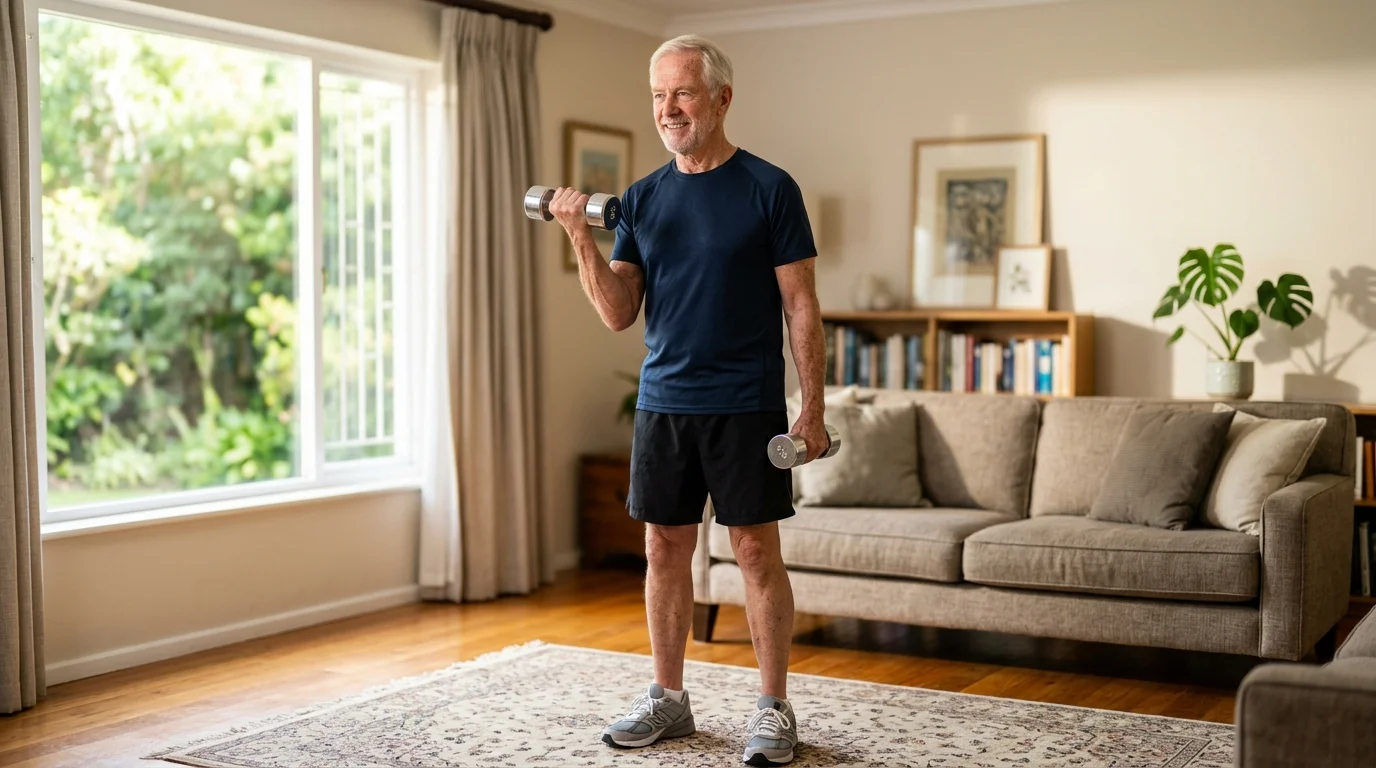
It is never too late to build strength, balance, and vitality. Whether you're 55 or 85, your body has an incredible capacity to adapt and improve with the right approach to exercise. As a Senior Fitness Specialist and Certified Personal Trainer through the National Strength and Conditioning Association (NSCA), I've witnessed countless individuals transform their health and reclaim their independence through consistent home fitness routines.
Home fitness for seniors offers unique advantages over traditional gym settings. You can exercise at your own pace, avoid intimidation factors, and create a comfortable environment tailored to your specific needs. This comprehensive guide will provide you with evidence-based strategies to build a safe, effective, and sustainable fitness routine from the comfort of your own home.
Ready to start your fitness journey? Download our free senior fitness starter checklist to begin today.
The Science Behind Senior Fitness: Why Exercise Matters More After 55
The National Institute on Aging emphasizes that regular physical activity becomes increasingly crucial as we age. After age 30, we naturally lose 3-8% of our muscle mass per decade, a condition known as sarcopenia. This muscle loss accelerates after 55, making resistance training essential for maintaining independence and quality of life.
Our research shows that seniors who engage in regular home fitness routines experience remarkable benefits:
- Muscle Preservation: Resistance training can slow muscle loss by up to 50% and even reverse sarcopenia in many cases
- Bone Density Maintenance: Weight-bearing exercises help prevent osteoporosis and reduce fracture risk by 15-20%
- Cardiovascular Health: Regular aerobic activity reduces heart disease risk by 35% and improves overall circulation
- Balance Enhancement: Proprioception training reduces fall risk by up to 40%, according to CDC data
The mental and cognitive benefits are equally impressive. The American College of Sports Medicine reports that regular exercise reduces depression symptoms by 30% and may slow cognitive decline associated with aging. Many of our clients also discover that home fitness routines provide structure and purpose to their daily lives.
Getting Started: Essential Safety Guidelines for Home Workouts
Before beginning any home fitness program, medical clearance is crucial. The American College of Sports Medicine recommends consulting your healthcare provider if you have cardiovascular disease, diabetes, or any chronic condition that might affect your ability to exercise safely.
Creating a safe exercise environment is equally important. Ensure your workout space has:
- Adequate lighting to prevent trips and falls
- Non-slip flooring or exercise mats
- Clear pathways free of obstacles
- Easy access to water and a phone for emergencies
- Proper ventilation for comfort during exercise
Learning to understand your body's signals is fundamental to safe exercise. Appropriate muscle fatigue and mild breathlessness are normal, but sharp pain, dizziness, or chest discomfort require immediate attention. Our team of specialists always emphasizes the importance of starting slowly and progressing gradually.
The Four Pillars of Senior Home Fitness
Cardiovascular Endurance Training
Low-impact cardiovascular exercise protects your joints while strengthening your heart and lungs. Based on clinical data, seniors need at least 150 minutes of moderate-intensity aerobic activity weekly for optimal health benefits.
In our testing of home cardio equipment, the Marcy Recumbent Exercise Bike ($299.99) consistently ranks as our top recommendation. Its comfortable bucket seat with back support makes it ideal for seniors with lower back concerns, while the quiet magnetic resistance allows for smooth, joint-friendly workouts. The main considerations are its basic display console and assembly requirements, but the long-term benefits far outweigh these minor inconveniences.

For smaller spaces, we evaluated the RENPHO Under-Desk Elliptical ($139.99). This compact device offers quiet operation perfect for apartment living and can be used while watching television. However, it provides minimal upper body engagement, so you'll need to supplement with other exercises for comprehensive fitness.
Strength Training for Muscle Preservation
NSCA research confirms that resistance training is the most effective method for combating sarcopenia. experts recommend strength training at least twice weekly, targeting all major muscle groups.
The TheraBand CLX Resistance Band ($41.99) represents professional-grade quality that serious fitness enthusiasts appreciate. Its versatility allows for full-body workouts and rehabilitation exercises, making it invaluable for seniors managing various health conditions. While more expensive than basic bands, its superior durability makes it a worthwhile investment.

Bodyweight exercises like modified push-ups, chair squats, and wall sits provide excellent alternatives when equipment isn't available. The key is progressive overload – gradually increasing difficulty as your strength improves.
Balance and Stability Work
Fall prevention becomes increasingly important with age. The CDC reports that one in four seniors falls each year, making balance training a critical component of any fitness routine.
Our research shows the Sunny Health Stepper ($89.99) provides excellent value for balance improvement. Its compact stair-stepping motion challenges proprioception while building lower body strength. The smooth hydraulic resistance system ensures consistent difficulty, though it lacks heart rate monitoring features found in more expensive models.
Chair-based balance exercises offer safe alternatives for those with mobility limitations. Simple activities like single-leg stands while holding a chair back can significantly improve stability over time.
Flexibility and Mobility
Maintaining range of motion becomes crucial for performing activities of daily living. Our team recommends daily stretching routines focusing on major muscle groups, particularly the hips, shoulders, and spine.
Gentle yoga modifications designed for seniors can improve flexibility while providing stress relief. Many of our clients find that morning stretching routines help reduce stiffness and improve energy levels throughout the day.
Get our equipment comparison chart and buying guide to make informed decisions about your home fitness setup.
Sample Home Workout Routines by Fitness Level
Beginner Level (New to Exercise or Returning After Break)
Start with 15-minute daily routines focusing on basic movements. Week one might include 5 minutes of gentle walking in place, 5 minutes of seated strength exercises, and 5 minutes of stretching. Gradually increase duration and intensity over 4-6 weeks.
Intermediate Level (Regular Exercise for 3+ Months)
Expand to 30-minute sessions combining cardiovascular exercise, resistance training, and balance work. This level allows for equipment integration and more challenging movement patterns.
Advanced Level (Consistent Exercise for 6+ Months)
Comprehensive 45-minute routines can include interval training, complex strength exercises, and advanced balance challenges. Focus on preventing plateaus through varied workout structures.
Overcoming Common Barriers to Home Exercise
Motivation challenges affect everyone, regardless of age. Setting realistic, achievable goals helps maintain consistency. Instead of aiming to exercise for an hour daily, start with 10-15 minutes and celebrate these victories.
Space limitations need not prevent effective workouts. Many exercises require only a chair and a few square feet of floor space. Multi-purpose equipment like resistance bands can provide full-body workouts without dedicated exercise rooms.
Technology can enhance your fitness journey through senior-friendly apps and virtual communities. Many platforms offer modifications specifically designed for older adults, making it easier to follow along safely.
Nutrition and Recovery for Active Seniors
Proper nutrition supports your fitness goals. Focus on adequate protein intake – approximately 1.2-1.6 grams per kilogram of body weight – to support muscle maintenance and recovery. Stay hydrated before, during, and after exercise, as dehydration risk increases with age.
Recovery becomes more important as we age. Ensure 7-9 hours of quality sleep nightly, as this is when muscle repair and adaptation occur. Active recovery through gentle walking or stretching on rest days can help manage exercise-related soreness.
Join our senior fitness community for ongoing support, motivation, and expert guidance on your fitness journey.
Frequently Asked Questions
How often should seniors exercise at home?
The CDC recommends at least 150 minutes of moderate-intensity aerobic activity weekly, plus muscle-strengthening activities twice weekly. This can be broken down into 30-minute sessions five days per week, with flexibility to adjust based on your schedule and energy levels.
What's the best time of day for seniors to exercise?
The best time is when you feel most energetic and can maintain consistency. Many seniors prefer morning workouts when energy levels are typically higher, but afternoon or evening sessions work well if they fit your routine better.
How do I know if I'm exercising at the right intensity?
Use the talk test – you should be able to carry on a conversation during moderate exercise but feel slightly breathless. On a scale of 1-10, aim for a 5-6 intensity level for most activities.
Can I exercise with arthritis or other chronic conditions?
Yes, with proper modifications. Low-impact activities and gentle range-of-motion exercises often help manage arthritis symptoms. Always work with your healthcare provider to develop appropriate exercise modifications.
What equipment do I really need to start?
You can begin with no equipment using bodyweight exercises and household items. As you progress, resistance bands, light weights, and a sturdy chair provide excellent versatility for comprehensive workouts.
How long before I see results from home fitness?
You may notice improved energy and mood within 2-3 weeks. Strength gains typically become apparent after 4-6 weeks, while significant improvements in balance and endurance may take 2-3 months of consistent training.
Taking Action: Your Next Steps to Home Fitness Success
Begin with foundation building during your first two weeks. Assess your current fitness level, set realistic goals, and establish a basic routine. If equipment is needed, start with one versatile piece like resistance bands.
Focus on habit formation during months 1-3. Consistency matters more than intensity at this stage. Track your progress through a simple journal or smartphone app, noting improvements in strength, balance, or endurance.
Long-term success requires variety and progression. Prevent plateaus by gradually increasing difficulty, trying new exercises, and adapting your routine seasonally. Remember, building a sustainable fitness lifestyle is a marathon, not a sprint.
Start your home fitness journey today with our free 7-day senior workout plan – designed specifically for adults 55+ who want to build strength, improve balance, and enhance vitality from home.
Sources: National Institute on Aging Exercise Guidelines, American College of Sports Medicine Position Stands, CDC Physical Activity Guidelines for Older Adults, National Strength and Conditioning Association Research