Falls are the leading cause of fatal and non-fatal injuries for older Americans. The CDC reports that every 11 seconds, an older adult is treated in the emergency room for a fall. While mobility aids like walkers and canes are critical, the most foundational element of fall prevention is what you wear on your feet.
Many seniors unknowingly increase their fall risk by wearing inappropriate footwear: worn-out slippers, heavy boots that cause shuffling, or overly cushioned athletic shoes that reduce proprioception (the brain's ability to sense the ground). Our occupational therapy advisors evaluated the best footwear specifically engineered for balance and stability.
The 4 Rules of Balance-Enhancing Footwear
1. Low Heel-to-Toe Drop
Shoes with a thick heel and thin toe push your center of gravity forward, accelerating the natural forward-leaning posture many seniors develop. A zero-drop or low-drop shoe (less than 8mm difference) keeps your weight centered over your arches, improving stability.
2. Firm, Wide Midsole
Ultra-plush "cloud-like" shoes feel comfortable but are terrible for balance. They absorb sensory feedback from the floor and allow the foot to roll laterally. A firm, wide base provides a stable platform and prevents ankle rolling.
3. Secure Fastening
Slip-on shoes without a firm heel counter often require toe-gripping to keep the shoe on, which alters natural gait. Shoes must secure firmly to the foot. For seniors with arthritis or dexterity issues, Velcro (hook-and-loop) closures are essential.
4. Lightweight Construction
Heavy shoes increase fatigue and contribute to the "shuffling" gait pattern that drastically increases trip risk on carpets and uneven sidewalks. A shoe should weigh less than 12 ounces per foot.
💡 Expert Tip: Before purchasing any health product, consult with your doctor or occupational therapist to ensure it meets your specific medical needs.
Top Recommendations for 2026
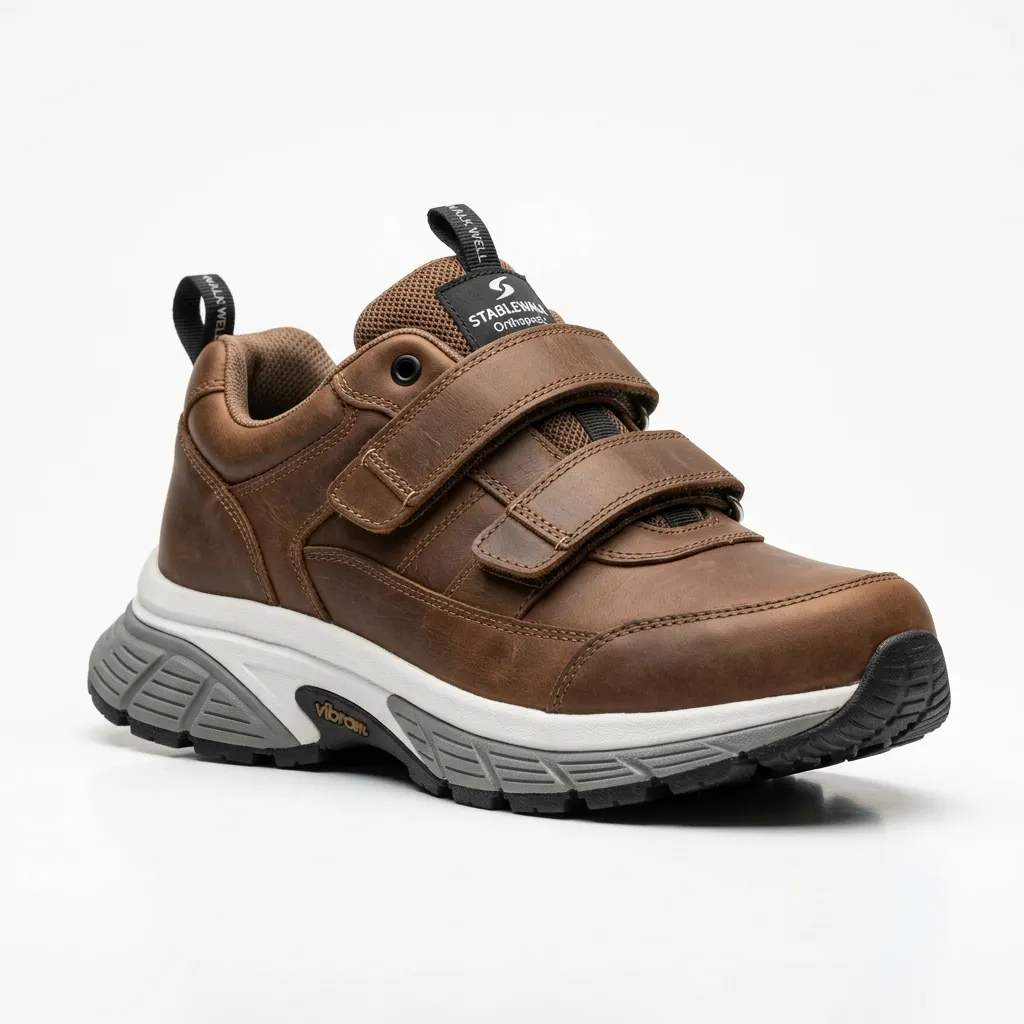
1. Propet Stability Walker — Best Overall for Balance
SeniorEase Score™: 9.2 / 10
- Stability: 10/10 — Extra-wide base and rigid heel counter
- Comfort: 8/10 — Firm support, not overly plush
- Ease of Use: 9/10 — Available with Velcro straps
- Value: 9/10 — Excellent durability for the price
The Propet Stability Walker features a uniquely wide "flared" outsole that physically resists lateral ankle rolling. The heel counter is rigidly reinforced, locking the foot in place. This is the shoe most frequently recommended by our physical therapy panel for seniors with neuropathy or generalized balance deficits.
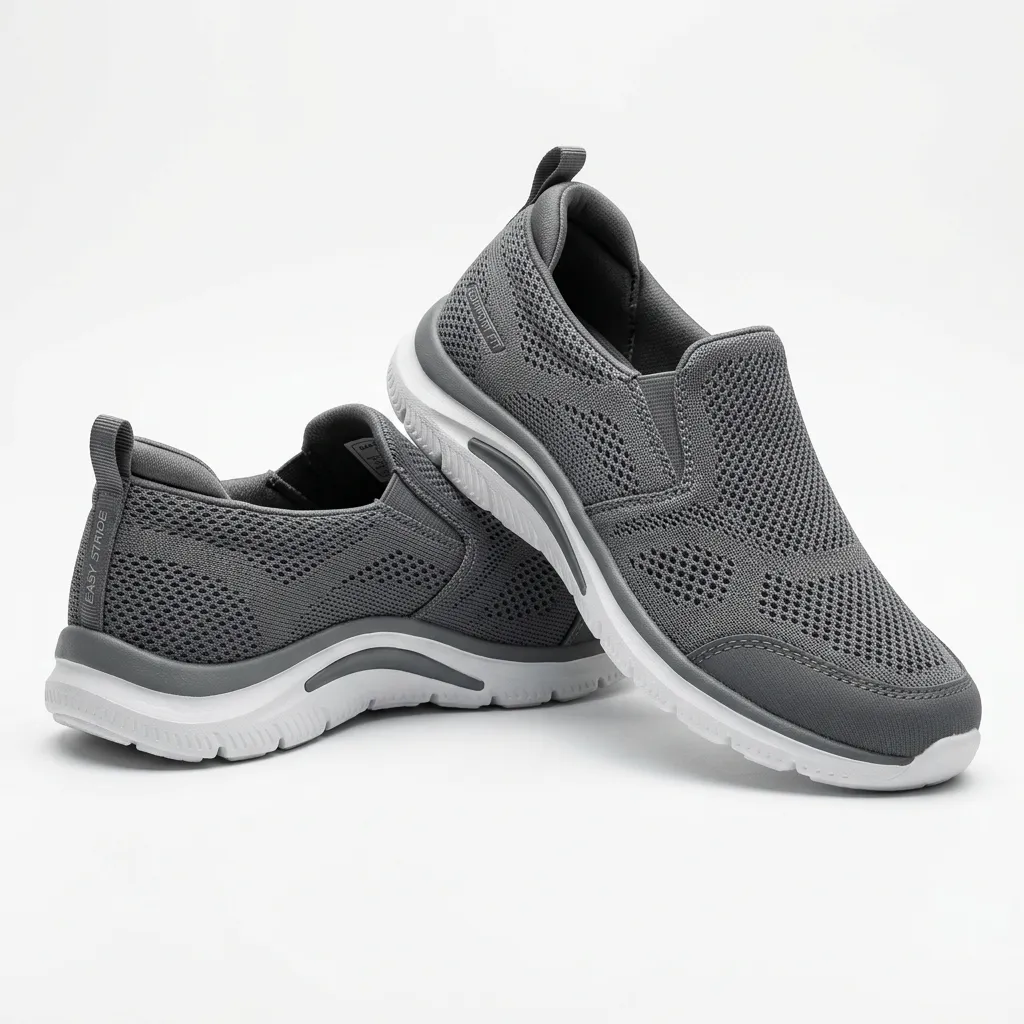
2. Skechers Go Walk Arch Fit — Best Lightweight Option
SeniorEase Score™: 8.5 / 10
- Stability: 7/10 — Good, but narrower base than Propet
- Comfort: 9/10 — Very lightweight and breathable
- Ease of Use: 10/10 — True slip-on design with firm heel collar
- Value: 8/10 — Affordable and accessible
For seniors who absolutely refuse to deal with laces or straps, the Skechers Arch Fit line offers a firm podiatrist-certified arch support system inside a very lightweight shoe. The "slip-in" heel design uses a rigid collar that won't crush when stepping into the shoe, avoiding the need to bend over.
3. New Balance 813 Hook and Loop — Best for Orthotics
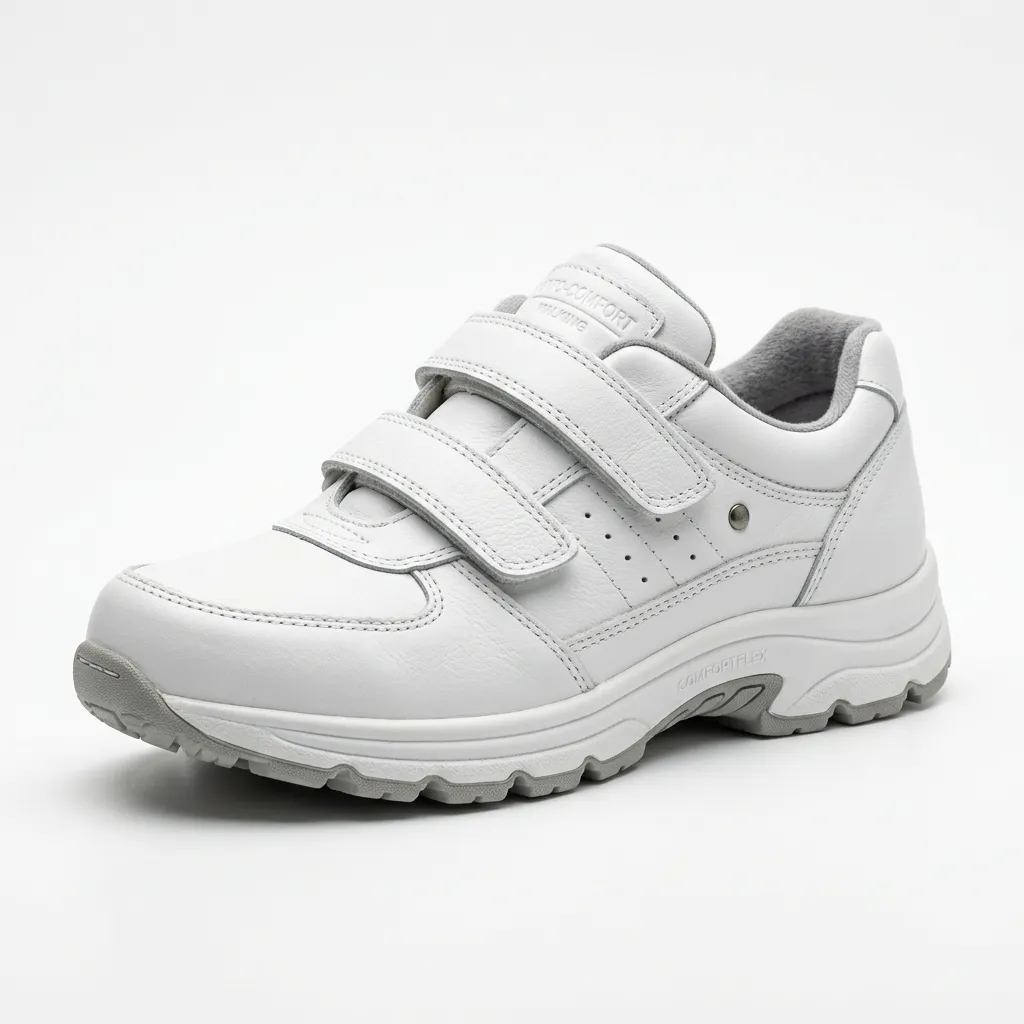
SeniorEase Score™: 8.8 / 10
- Stability: 9/10 — Rollbar technology prevents overpronation
- Comfort: 8/10 — Leather upper takes time to break in
- Ease of Use: 9/10 — Twin Velcro straps
- Value: 8/10 — Premium price point
New Balance incorporates their proprietary "Rollbar" technology in the heel — a posting system that minimizes rear-foot movement. The depth of the shoe makes it ideal for seniors who need to insert custom orthotics or braces.
Dangerous Footwear to Avoid
- Backless slippers: The number one cause of footwear-related falls at home. They provide no heel support and easily slip off on stairs.
- Thick-soled running shoes (Hokas): While excellent for joint pain, the high stack height "disconnects" the foot from the ground, worsening balance in seniors with neuropathy.
- Smooth-soled dress shoes: Provide zero traction on wet surfaces or tile floors.
FAQ
Should seniors wear shoes inside the house?
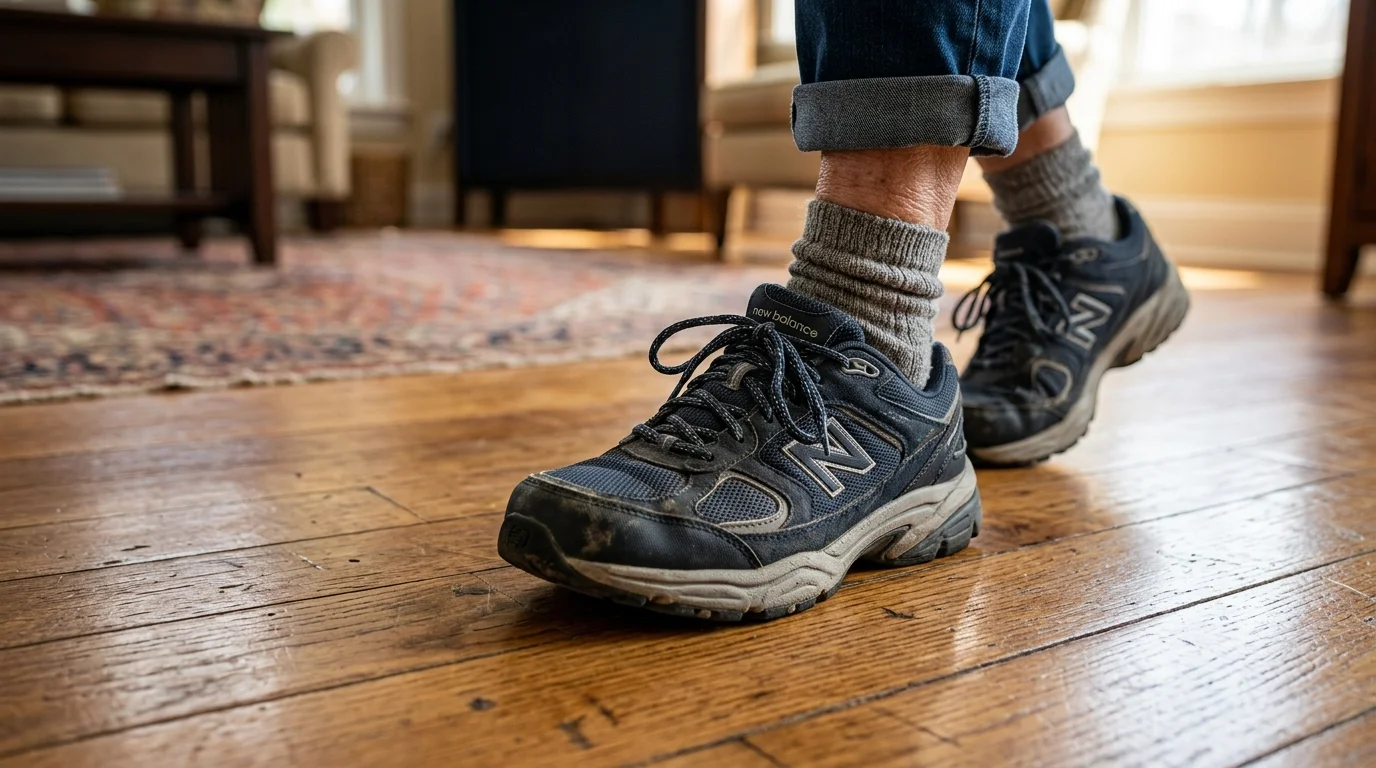
Yes. The American Geriatrics Society strongly advises against walking barefoot or in socks indoors. Socks on hardwood floors are incredibly dangerous. If you prefer not to wear street shoes indoors, designate a clean pair of sturdy, rubber-soled supportive shoes exclusively for indoor use.
Do special socks help with balance?
For seniors with diabetes or severe neuropathy, non-binding grip socks can help if shoes cannot be worn. However, socks cannot replace the structural support of a firm-soled shoe for preventing falls.
Can Medicare cover the cost of these shoes?
Under the Therapeutic Shoe Bill, Medicare Part B may cover the cost of therapeutic shoes and inserts for individuals with diabetes who meet specific criteria. A prescription from a podiatrist and physician documentation is required.
How frequently should elderly adults replace their shoes?
Unlike younger adults who might replace shoes based purely on aesthetics, seniors must replace shoes the moment structural integrity degrades. The EVA foam in midsoles compresses over time, typically lasting 300 to 500 miles of walking, or about 6 to 9 months of daily wear. A compressed midsole forces the foot into an unnatural alignment, destroying the balance benefits the shoe was designed to provide. If you place your shoe on a flat table and it tilts to one side, or if the tread pattern on the bottom is worn smooth, it is an immediate fall hazard and must be replaced.
What time of day is best for fitting new shoes?
The NIA recommends fitting shoes late in the afternoon. Edema (fluid retention) causes most seniors' feet to swell as the day progresses. A shoe that fits perfectly at 9 AM may be dangerously tight and restrictive by 4 PM, cutting off circulation and exacerbating neuropathy pain. Always wear the exact type of socks you plan to use with the shoes during the fitting process.
Understanding Outsole Materials
The material touching the floor is just as important as what touches your foot. A sole that is too grippy (like deep lugged hiking boots) can "catch" on carpet loops, causing a trip. A sole that is too smooth (like leather dress shoes) causes slips on tile or hardwood. The ideal material is a moderately textured rubber compound. Polyurethane (PU) outsoles are also excellent as they provide a balance of slip-resistance and durability without the excessive weight of solid rubber.
Comparison Matrix: Finding Your Perfect Fit
To help you navigate the options, we have compiled a comparison matrix based on clinical criteria. When choosing footwear, consider your specific mobility challenges, whether that involves neuropathy, severe edema (swelling), or a history of recurring falls.
| Shoe Type | Best For | Key Features | Price Range |
|---|---|---|---|
| Velcro Walking Shoes | Arthritis, Limited Dexterity | No laces, wide toe box, firm heel counter | $60 - $120 |
| Diabetic / Orthopedic | Neuropathy, Severe Swelling | Seamless interior, extra depth, highly breathable | $100 - $180 |
| Slip-On (Hands-Free) | Post-Surgery, Hip/Knee Pain | Reinforced heel, step-in technology, slip-resistant sole | $80 - $140 |
Clinical Guidelines for Diabetic and Neuropathic Feet
For seniors living with diabetes or peripheral neuropathy, footwear is not just about balance—it is a critical component of medical care. Neuropathy diminishes the ability to feel pain, meaning a small blister or pressure point caused by a poorly fitting shoe can quickly develop into a severe ulcer without the wearer noticing. This makes the internal environment of the shoe incredibly important.
A true diabetic shoe must possess a completely seamless interior. Even a minor seam can cause devastating friction over a few hours of walking. Furthermore, these shoes feature "extra depth" construction, providing the necessary vertical space to accommodate custom orthotics without crowding the instep or toes. If you have been diagnosed with diabetic neuropathy, do not settle for standard walking shoes. Look for styles specifically designated as diabetic footwear, and prioritize breathable materials that prevent moisture accumulation, which can lead to fungal infections.
Additional Frequently Asked Questions
Does Medicare cover the cost of special shoes for seniors?
Under specific conditions, yes. Medicare Part B covers therapeutic shoes or inserts for individuals with diabetes who have severe diabetic foot disease. Your podiatrist or physician must prescribe the shoes, and they must be provided by a certified supplier. For non-diabetic balance issues, Medicare generally does not cover the cost of walking shoes, considering them an everyday clothing item rather than durable medical equipment (DME).
Are slip-on shoes safe for seniors with balance problems?
Traditional slip-on shoes, such as mules or clogs with an open back, are extremely dangerous for seniors with balance issues because they require the toes to grip the shoe to keep it on, altering your natural gait and increasing fall risk. However, modern "hands-free" slip-on shoes (like Kizik or certain Skechers models) that feature a fully enclosed heel and a reinforced heel counter that springs back into place are generally safe, provided they offer a snug, secure fit around the midfoot.