Medical Disclaimer: The information provided in this guide is for educational purposes only and is not intended as personal medical advice. Always consult your physician, physical therapist, or qualified healthcare professional before beginning any new treatment, supplement, or mobility regimen.
For millions of older adults, the simple act of taking a walk can become an exhausting, painful ordeal. Traditional rollators and standard walking frames have long been the default prescription for ambulatory assistance. Yet, these conventional designs inherently force the user into a forward-stooped posture—a biomechanical stance that exacerbates age-related spinal changes, strains the cervical spine, and compresses irritated lumbar nerve roots.
According to the Centers for Disease Control and Prevention (CDC), more than one out of four older adults falls each year, making mobility preservation a matter of acute clinical concern. When degenerative disc disease, severe osteoporosis, or progressive thoracic kyphosis enters the picture, traditional walking frames often accelerate postural collapse. Upright walkers—also known as stand-up rollators or forearm-support walkers—represent a paradigm shift in functional geriatrics. By elevating the user's weight distribution to padded forearm troughs, these devices realign the center of gravity, decompress the lumbar spine, and restore the dignity of eye-level ambulation.
To understand why an upright walker can be life-changing, one must examine the kinematics of aging gait. When an older adult leans over a standard rollator, the lumbar spine enters prolonged forward flexion. In patients with lumbar spinal stenosis or degenerative spondylolisthesis, this posture narrows the neural foramina and spinal canal, frequently triggering the painful burning, numbness, and cramping of neurogenic claudication.
Furthermore, relying on conventional handgrips places immense shear force on arthritic wrists (radiocarpal joints), thumb bases (carpometacarpal osteoarthritis), and the shoulders. Upright walkers change this equation fundamentally:
- Axial Load Redistribution: Body weight is transferred through the ulna and radius directly to the padded forearm cradles, completely bypassing fragile wrist joints and thumb stabilizers.
- Restoration of Lumbo-Pelvic Rhythm: By bringing the trunk into a perpendicular, neutral orientation, upright rollators widen the thoracic cavity, expanding lung capacity and encouraging a normal heel-to-toe gait cycle.
- Cervical Spine Relief: Forward-stooped walking forces the patient into cervical hyperextension just to look ahead. Upright posture eliminates suboccipital muscle spasm and secondary cervicogenic headaches.
- Elevated Visual Field: Standing tall expands the user's peripheral field, allowing earlier detection of environmental hazards, rugs, and sidewalk fissures, substantially reducing trip-and-fall incidents.
Top Upright Walkers for Seniors: Clinical Comparison
The following comparison details leading forearm-support mobility devices, analyzing frame dynamics, clinical mechanisms, weight limitations, and therapeutic suitability.
| Model & Category | Weight / Capacity | Biomechanical Mechanism | Arthritic Hand Usability | Primary Clinical Indication |
|---|---|---|---|---|
| ELENKER Upright Walker Best Overall Ergonomics |
22.5 lbs / 300 lbs | Deep contoured arm troughs; stabilizes neutral thoracic alignment | Loop-lock handbrakes with minimal resistance required | Lumbar spinal stenosis, mild-to-moderate kyphosis |
| OasisSpace Heavy Duty Best for High Stability & Bariatric Needs |
26.0 lbs / 450 lbs | Reinforced cross-brace frame; widened base of support (BOS) | Ergonomic palm resting grips; oversized brake paddles | Severe balance deficits, high BMI, bilateral knee osteoarthritis |
| Journey Air Elite Best Lightweight & Portable |
18.0 lbs / 300 lbs | Aircraft-grade aluminum; agile pivot radius with upright geometry | Tension-adjustable handgrips; light-touch brake cables | Active seniors, travel, mild post-stroke hemiparesis (stable side) |
| Drive Medical Forearm Platform Best for Clinical Rehabilitation |
24.5 lbs / 350 lbs | Multidirectional platform adjustability; dynamic trunk stabilization | Universal joint hand levers; adaptable for non-weight-bearing wrists | Post-surgical hip/knee arthroplasty, advanced rheumatoid arthritis |
| View details → | View details → | View details → | View details → |
In-Depth Reviews: The Best Stand-Up Walkers of 2026
1. ELENKER Upright Walker: The Gold Standard in Postural Realignment
In physical therapy clinics across the country, the ELENKER upright platform is frequently cited as the benchmark for balancing cost, durability, and biomechanical precision. The primary strength of this unit lies in its multi-axis forearm cradles. By allowing height and angle customization, it enables patients with varying degrees of dorsal kyphosis to achieve an upright posture without shifting their center of gravity dangerously forward.
Clinical Insights: The 10-inch front caster wheels offer superior rollability over sidewalk cracks, low-pile carpeting, and threshold transitions. For older individuals suffering from spinal stenosis, walking with this unit immediately reduces positional radiculopathy by allowing the pelvis to tilt naturally posteriorly during the terminal stance phase of gait.
2. OasisSpace Heavy Duty Stand-Up Walker: Maximum Structural Rigidity
For seniors dealing with concurrent Parkinsonian gait disturbances, ataxia, or higher body mass, standard frames can feel wobbly or precarious. The OasisSpace Heavy Duty model counters this with an ultra-wide base of support, thick cross-strut aluminum bars, and a verified weight tolerance of 450 pounds.
Clinical Insights: The wider frame broadens the patient's functional base of support (BOS). This significantly dampens lateral sway and trunk tremors. The forearm platforms feature high-density memory foam lined with non-abrasive polyurethane, preventing skin breakdown or sheer-induced purpura in geriatric users with fragile, thinned skin.
3. Journey Air Elite: The Solution for Muscle Weakness and Portability
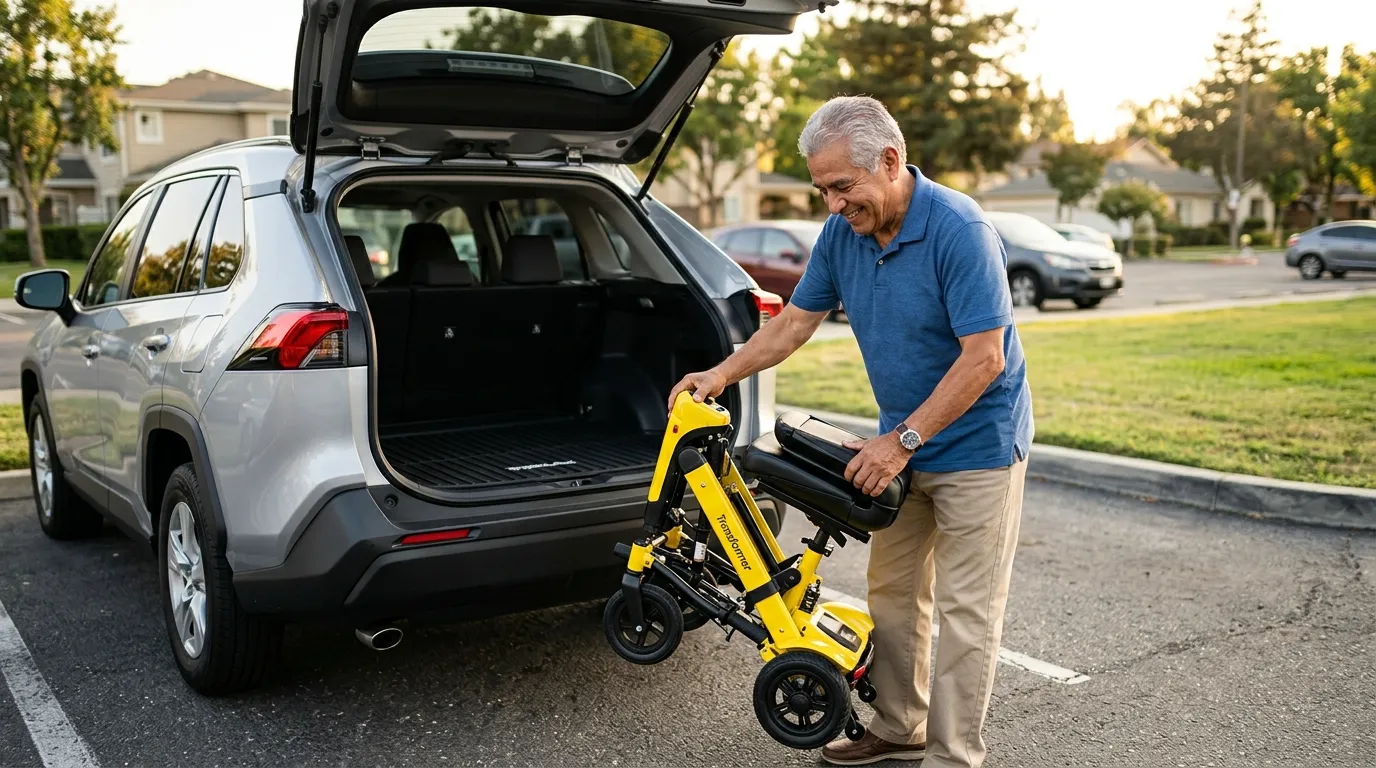
A recurring grievance among seniors using mobility aids is the inability to hoist heavy equipment into a car trunk. Weighing only 18 pounds, the Journey Air Elite removes this hurdle without sacrificing upright ergonomics. Constructed from lightweight aluminum alloys, it folds compactly along its vertical axis with a single central pull strap.
Clinical Insights: Patients with stage 2 or 3 sarcopenia, chronic obstructive pulmonary disease (COPD), or congestive heart failure expend massive caloric energy simply managing a heavy walker. The Journey Air Elite lowers the energetic cost of ambulation, allowing patients to travel greater functional distances before experiencing fatigue-induced gait degradation.
4. Drive Medical Forearm Platform Rollator: Rehabilitative Precision
For individuals recovering from joint replacements, polytrauma, or advanced rheumatoid arthritis with severe wrist deformities (such as ulnar drift or swan-neck deformities), standard hand brakes are unusable. Drive Medical’s rehabilitative platform accommodates contracted hands and offers multidirectional handle articulation.
Clinical Insights: This device allows true non-weight-bearing loading on the wrist joints. By securing the forearms via Velcro stabilization straps, patients who lack grip strength can safely decelerate and lock the wheels using a palm-depression lever, preserving safety even with severe hand weakness.
Senior Usability: Dexterity, Assembly, and Daily Maneuverability
When selecting a mobility aid, real-world practicality matters just as much as clinical biomechanics. Many devices excel in a clinical gym but fail in a compact residential apartment.
Arthritic Hands and Handbrake Resistance
Seniors with severe osteoarthritis of the first carpometacarpal (CMC) joint often cannot generate the grip force required to squeeze conventional bicycle-style handbrakes. When evaluating an upright walker, prioritize models with loop-lock levers that can be pushed down with the heel of the palm to park, and pulled up with minimal finger flexion to slow down. Adjustable brake-cable tension is an essential safety feature to adapt the tool to your exact grip strength.
Thresholds, Doorways, and Turning Radii
Standard interior residential doorways in the United States measure between 30 and 32 inches in width, whereas older residential homes may have doors as narrow as 28 inches. Most upright walkers feature an overall width of 24 to 28 inches. Measure your narrowest hallway, bathroom entry, and kitchen turnarounds before purchasing. Models with 360-degree pivoting front casters allow tight zero-radius turns, preventing the dangerous maneuvers seniors often attempt when navigating tight spaces.
Medication Interactions, Fall Risks, and Clinical Warnings
The biomechanical benefits of an upright walker can occasionally interact with underlying systemic medical conditions. Prescribing or purchasing a stand-up walker requires careful clinical consideration of the following risks:
- Orthostatic Hypotension: Standing up completely straight causes transient venous pooling in the lower extremities. Seniors taking antihypertensives (such as ACE inhibitors, beta-blockers, or calcium channel blockers) or diuretics (e.g., furosemide) must pause for 10 to 15 seconds after rising from the walker's seat before initiating forward steps to avoid postural syncope or dizziness.
- Medication-Induced Drowsiness: Central nervous system depressants, including benzodiazepines, sleep aids, and muscle relaxants, impair reaction times. Slower reaction times impede the rapid deployment of handbrakes during down-slope ambulation.
- Anticoagulant Therapy: Seniors taking blood thinners (such as warfarin, apixaban, or rivaroxaban) have a high risk of deep tissue hematomas from skin tears. Ensure the forearm troughs are padded with rounded, seamless edges to prevent mechanical friction against the user's ventral forearms.
- Proper Fitting: A poorly adjusted walker can worsen gait. The forearm rests should be positioned so that the user's elbows rest at a comfortable 90-degree angle while the shoulders remain completely relaxed (not elevated toward the ears). If the rests are set too high, the patient risks thoracic outlet compression; if set too low, forward-stooping posture will return.
The SeniorEase Score™ Evaluation
Our multidisciplinary team evaluates mobility equipment based on four rigorous metrics designed to reflect real-world clinical utility for older adults:
- Clinical Evidence & Postural Correction (30%): Measured ability to alleviate lumbar axial load, correct thoracic kyphosis, and promote an upright, symmetrical step pattern.
- Usability & Ergonomic Adaptability (25%): Evaluated on ease of assembly, adjustability for arthritic hands, handle cushioning, and mechanical brake sensitivity.
- Safety & Structural Stability (25%): Assessed through tip-risk metrics, brake responsiveness on inclines, caster-wheel obstacle clearance, and structural rigidity.
- Value & Daily Longevity (20%): Assessed based on material durability, replacement part availability, warranty coverage, and price-to-performance ratio.
Across these criteria, the ELENKER Upright Walker earns a SeniorEase Score™ of 9.4/10, making it our top clinical recommendation for home and community use.
Stay Confident, Active, and Independent
Navigating age-related mobility changes does not mean relinquishing your independence. Subscribe to our free Senior Ease Wellness Newsletter to receive clinical, therapist-authored guides on fall prevention, joint wellness, and adaptive living delivered right to your inbox every week.
Click here to join over 45,000 active seniors committed to healthy, upright aging.
Frequently Asked Questions
Can an upright walker help with lumbar spinal stenosis?
Yes. While leaning forward temporarily relieves spinal stenosis by widening the spinal canal, it severely weakens back extensor muscles over time and risks fall injuries. An upright walker allows the patient to bear a substantial portion of their upper body weight through their forearms, achieving mechanical unloading of the lumbar discs and facet joints without adopting a dangerous, forward-stooped posture.
Does Medicare cover upright stand-up rollators?
Standard Medicare Part B covers basic durable medical equipment (DME), which typically includes standard walkers or basic rollators under code E0143. However, upright forearm-support walkers often carry higher retail costs. While Medicare may reimburse an amount equal to a standard rollator with a doctor’s Certificate of Medical Necessity (CMN), the remaining balance usually requires out-of-pocket payment or supplemental insurance coverage.
How do I determine the right upright walker height?
Stand erect with your normal walking shoes on, letting your arms hang naturally at your sides. Measure the distance from the crease of your elbow to the floor. The forearm cradles of your upright walker should be set precisely to this height. This configuration ensures that when your forearms rest in the cradles, your elbows bend at a safe, ergonomic 90-degree angle without shrugging your shoulders.
Are upright walkers safe for outdoor sidewalks and parks?
Upright walkers equipped with large front wheels (9 to 10 inches or larger) handle outdoor surfaces such as smooth asphalt, packed gravel, and concrete sidewalks effectively. However, due to their higher center of gravity compared to low-slung traditional rollators, extra caution must be taken on steep lateral slopes, soft mud, or cracked curbs. Always use both handbrakes simultaneously to maintain complete control when walking downhill.