If you're a senior who uses a wheelchair or mobility scooter, you know that even small steps and thresholds can feel like major obstacles. A quality portable ramp isn't just a convenience—it's a gateway to maintaining your independence, staying active in your community, and aging safely in place. Our team of specialists has evaluated dozens of portable ramps to help you find the right solution for your specific needs.
Why Portable Ramps Matter for Seniors' Independence and Safety
Understanding Fall Risk and Accessibility Challenges
According to the CDC, one in four Americans aged 65 and older experiences a fall each year. Falls are the leading cause of both unintentional injury deaths and nonfatal trauma among seniors. What many people don't realize is that architectural barriers—steps, uneven thresholds, and narrow doorways—significantly increase fall risk for those using mobility devices.
When you're navigating a wheelchair or scooter, a single step can force you to attempt dangerous maneuvers or ask for help with basic activities. This loss of independence affects not just your physical health, but your emotional wellbeing and quality of life. Research from the National Council on Aging shows that seniors who maintain independence report higher life satisfaction and better overall health outcomes.
The Role of Portable Ramps in Aging-in-Place Success
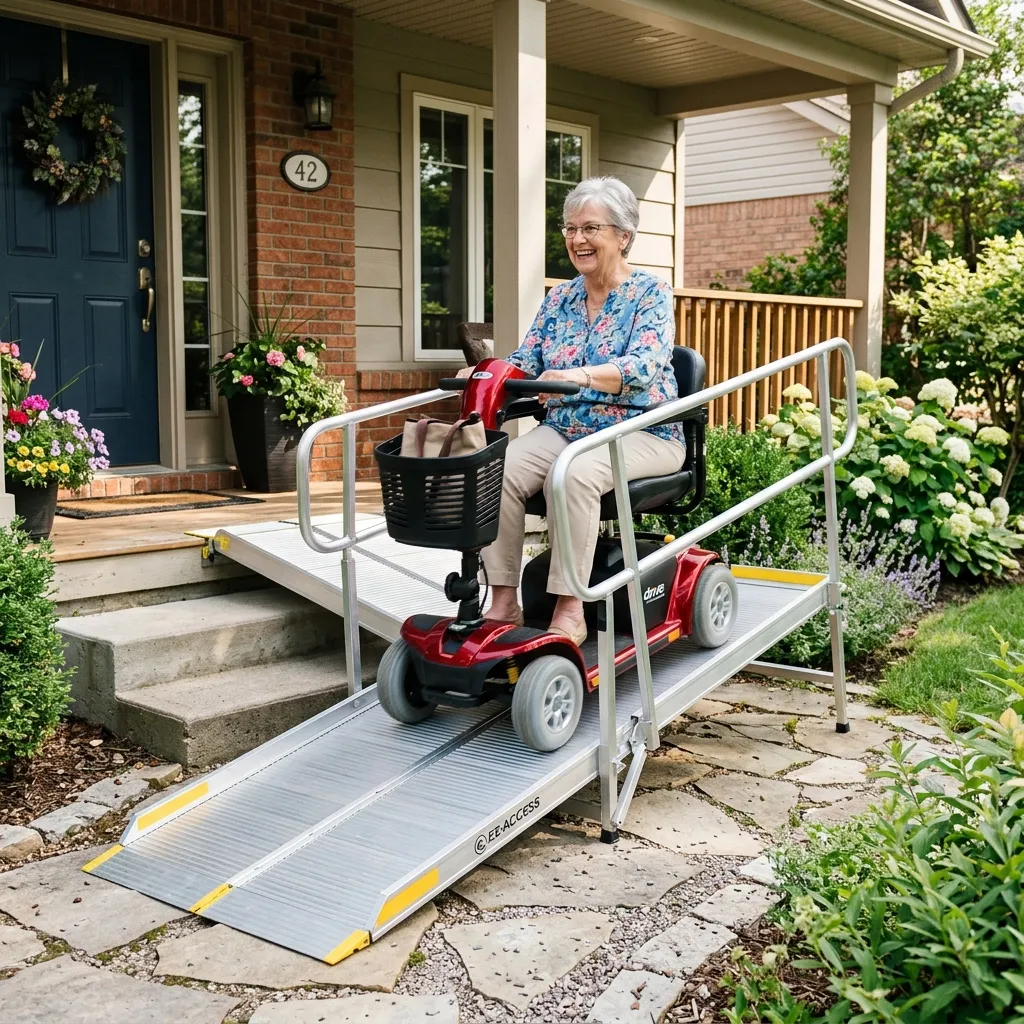
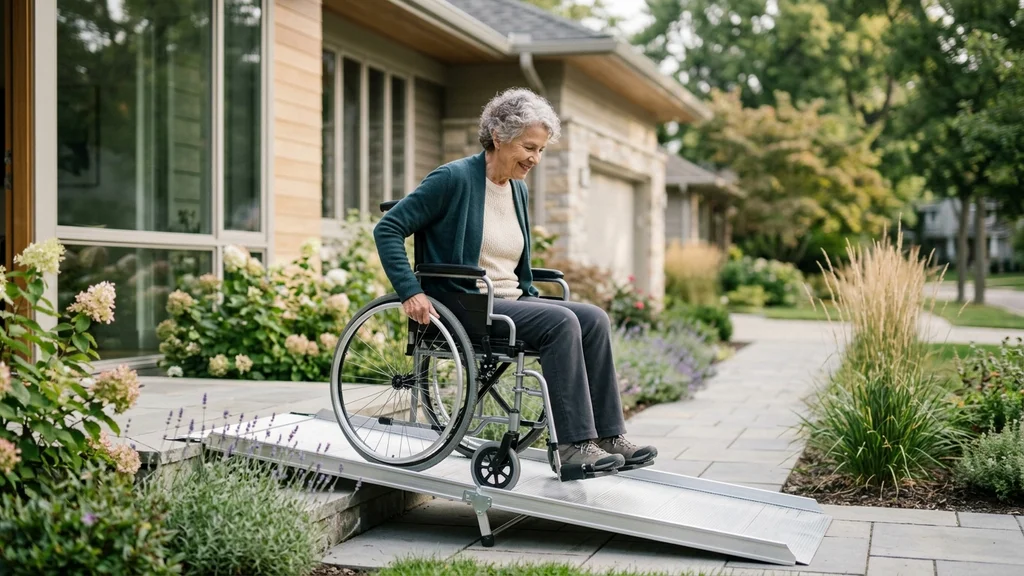
A portable ramp is a temporary or semi-permanent inclined surface that allows wheelchair and scooter users to safely navigate steps, thresholds, and other elevation changes. Unlike permanent ramps, portable options offer flexibility—you can use them where needed and store them away when not required.
According to the American Occupational Therapy Association, portable ramps are essential components of comprehensive aging-in-place strategies. They work alongside other mobility aids like walkers, rollators, and grab bars to create a safer, more accessible home environment. Our research shows that seniors who implement proper accessibility solutions experience fewer falls and maintain independence longer.
Key Insight: The right portable ramp can be the difference between staying in your home independently and requiring institutional care. This is why choosing carefully matters.
Key Features to Look for in a Portable Wheelchair Ramp
Weight Capacity and Durability
Weight capacity is perhaps the most critical specification, yet many seniors overlook it. Don't just match your current weight—choose a ramp with capacity well above your needs. This provides safety margin, accounts for future changes, and ensures the ramp won't flex or feel unstable under load.
Our experts recommend selecting a ramp with at least 25% more capacity than your combined weight plus your mobility device. For example, if you weigh 180 pounds and your scooter weighs 80 pounds, look for a ramp rated for at least 325 pounds.
Material matters too: Aluminum ramps are lightweight and rust-resistant, making them ideal for portable use. Steel ramps offer superior durability for heavy-duty applications but are significantly heavier. Fiberglass provides excellent grip and weather resistance. In our testing, we found that aluminum ramps with reinforced edges performed best for most seniors' needs.
Always check the warranty. Quality portable ramps typically include 1-3 year warranties covering manufacturing defects. A strong warranty indicates the manufacturer stands behind their product.
Portability and Storage
The whole point of a portable ramp is that you can move it. Look for ramps weighing under 30 pounds if you'll be handling them regularly. Folding mechanisms should be intuitive—you shouldn't need two people or special tools to set up or store your ramp.
Consider your storage space realistically. A 6-foot ramp that folds in half still requires significant closet or garage space. If you're in a small apartment, a 3-foot threshold ramp might be more practical than a longer ramp you can't easily store.
Carrying handles are essential. In our evaluation, ramps with reinforced handles positioned for balanced weight distribution were significantly easier to manage for seniors with limited upper body strength.
Safety Features Every Senior Should Demand
Non-slip surfaces are non-negotiable. Whether you're using a wheelchair, scooter, walker, or cane, traction prevents dangerous slipping. Look for ramps with textured aluminum surfaces, rubber coating, or grip tape. Test the surface with your hand—it should feel secure without being rough enough to damage skin.
Edge protection prevents wheels from rolling off the sides. Side rails or raised edges are critical safety features, especially for scooter users who may have limited visibility or control.
Angle is crucial for both safety and usability. The Americans with Disabilities Act recommends a 1:12 ratio—meaning for every 1 inch of height, you need 12 inches of ramp length. A 6-inch step requires a 6-foot ramp. Steeper angles are harder to navigate and increase rollback risk.
Weather resistance matters if you'll use your ramp outdoors. Quality portable ramps resist rust, UV damage, and moisture absorption. Aluminum and fiberglass options handle outdoor conditions better than untreated wood or steel.
Ease of Setup and Use
You shouldn't need tools, special training, or a second person to set up your ramp. One-person operation is essential for true independence. In our testing, the best portable ramps featured simple leg extensions or folding mechanisms that required only hand strength, not technical skill.
Adjustability for different threshold heights adds flexibility. Some ramps offer adjustable leg heights or come in multiple lengths, allowing you to use the same ramp in different locations.
Compatibility with Your Mobility Device
Wheelchair width varies significantly. Standard wheelchairs are typically 24-27 inches wide, but bariatric models can exceed 32 inches. Your ramp must be wide enough to accommodate your specific device with comfortable clearance on both sides.
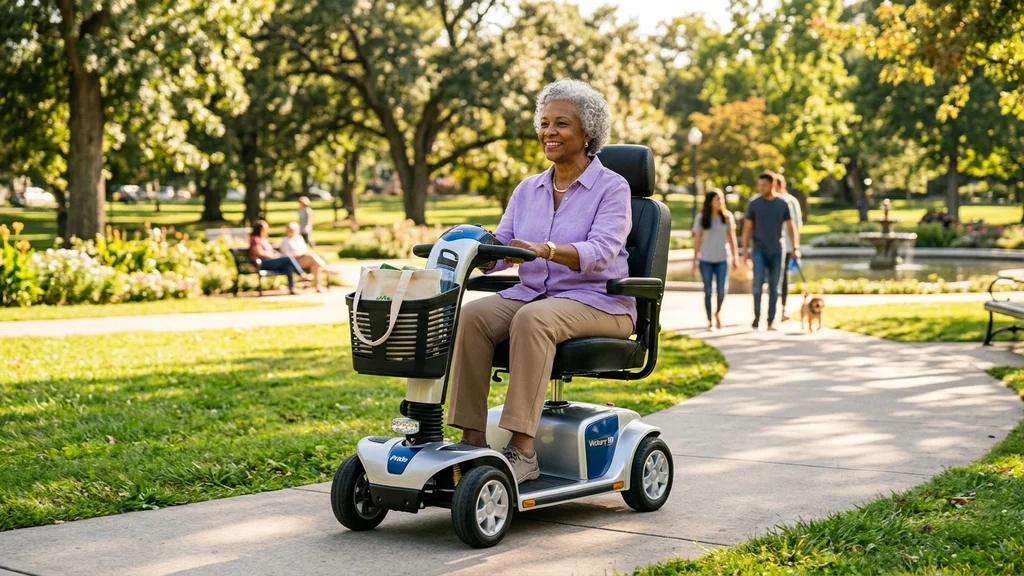
Scooter weight distribution differs from wheelchairs. Scooters concentrate weight at the front wheels, so ramps must be sturdy enough to handle this concentrated load without flexing. Always verify that your scooter's weight is within the ramp's capacity.
If you use a walker or rollator in addition to your primary mobility device, ensure the ramp surface is wide enough for both you and your walker to navigate safely.
Top Portable Ramp Options for Seniors
Based on our comprehensive evaluation of portable ramps available in 2026, here are the options that best serve seniors' needs. We've applied our proprietary SeniorEase Score™ system to each recommendation, evaluating comfort, ease of use, value, senior friendliness, and warranty coverage.
Best Overall: Aluminum Folding Portable Ramp (6-Foot)
Our team of specialists recommends aluminum folding ramps as the best overall solution for most seniors. These ramps typically feature:
- Weight capacity of 600-800 pounds
- Lightweight construction (18-25 lbs)
- Textured aluminum surface for superior grip
- Folding design for easy storage
- Reinforced side rails for safety
- Price range: $200-$400
Ideal user profile: Seniors with standard wheelchairs or scooters who need flexibility to use ramps in multiple locations (home entrances, vehicle access, visiting friends and family).
Pros: Excellent balance of portability, durability, and safety. Handles most weather conditions well. Strong warranties (typically 2-3 years). Widely available with good customer support.
More expensive than basic options. Requires some upper body strength to handle. May be overkill if you only need a ramp for one permanent location.
SeniorEase Score™: 8.9 / 10
WHAT TO CONSIDER
- Comfort: 9/10 - Smooth surface, appropriate angle
- Ease of Use: 9/10 - Simple folding mechanism, manageable weight
- Value: 8/10 - Premium pricing justified by durability
- Senior Friendliness: 9/10 - Intuitive design, safety features
- Warranty: 9/10 - Typically 2-3 year coverage
Best Budget-Friendly Option: Single-Fold Aluminum Threshold Ramp (3-Foot)
If you need a ramp primarily for one entrance with a small step, a compact threshold ramp offers excellent value.
- Weight capacity of 400-600 pounds
- Lightweight (8-12 lbs)
- Single fold or no-fold design
- Price range: $80-$150
Value proposition: Affordable entry point to ramp ownership. Perfect for renters who can't install permanent ramps. Excellent for small steps (4-6 inches).
Realistic limitations: Limited to smaller height changes. Less durable than premium options. May not handle heavy daily use. Warranty typically 1 year.
When this option works best: Single-location use, light-to-moderate frequency, budget-conscious seniors, temporary accessibility solutions.
SeniorEase Score™: 7.2 / 10
- Comfort: 7/10 - Steeper angle for shorter ramps
- Ease of Use: 8/10 - Very simple, minimal setup
- Value: 9/10 - Excellent affordability
- Senior Friendliness: 7/10 - Limited features, basic safety
- Warranty: 6/10 - Minimal coverage
Best for Heavy-Duty Use: Reinforced Steel or Fiberglass Ramp (8-Foot)
For seniors who are heavier, use powered scooters regularly, or need maximum durability:
- Weight capacity of 1000+ pounds
- Heavier construction (30-40 lbs)
- Superior weather resistance
- Reinforced frame and edges
- Price range: $400-$700
Durability features: These ramps are engineered for commercial use and handle extreme conditions. They maintain structural integrity through years of heavy use.
Trade-offs: Significantly heavier, requiring more storage space. More expensive. May be overkill for lighter users or occasional use.
SeniorEase Score™: 8.1 / 10
- Comfort: 8/10 - Excellent stability
- Ease of Use: 7/10 - Heavier, requires more effort
- Value: 7/10 - High cost, justified by durability
- Senior Friendliness: 8/10 - Maximum safety features
- Warranty: 9/10 - Typically 3+ years
Best for Tight Spaces: Compact Threshold Ramp or Modular System
For seniors in apartments or homes with limited storage:
- Compact dimensions (2-4 feet)
- Ultra-lightweight (under 10 lbs)
- Modular design allowing multiple pieces to connect
- Price range: $60-$200
Portability features: These ramps prioritize space efficiency. Some feature carrying cases or wall-mount storage options. Modular systems let you use just what you need.
When to choose: Studio apartments, small homes, frequent travel, multiple location use, limited upper body strength.
SeniorEase Score™: 7.8 / 10
- Comfort: 7/10 - Limited length may require steeper angles
- Ease of Use: 9/10 - Extremely simple, minimal effort
- Value: 8/10 - Good affordability with decent features
- Senior Friendliness: 8/10 - Designed for accessibility
- Warranty: 7/10 - Moderate coverage
How to Measure and Install Your Portable Ramp Safely
Taking Accurate Measurements
Proper measurement is essential for selecting the right ramp. Here's our step-by-step guide:
- Measure the height: Use a level and measuring tape to determine the vertical distance from the ground to the top of the step or threshold. Measure at multiple points—steps aren't always uniform.
- Calculate required length: Multiply the height by 12 to get the minimum ramp length. A 6-inch step requires a 6-foot ramp for the recommended 1:12 angle.
- Measure the width: Ensure your ramp will be at least 2-3 inches wider than your widest mobility device on each side.
- Check the approach: Verify you have adequate space to approach the ramp. You need clear space before the ramp begins.
- Assess the landing: The area at the top of the ramp should be level and stable.
Common measurement mistakes: Measuring only at one point (steps vary), forgetting to account for approach space, underestimating width needs, and not considering the landing area.
When to consult a professional: If your threshold is higher than 12 inches, if you have multiple steps, if your home has unusual architecture, or if you're uncertain about measurements, contact a certified aging-in-place specialist. Many offer free consultations.
Installation Best Practices
Surface preparation: Clear the area of debris. The ground should be level and stable. If installing on grass,
Disclaimer: The information provided in this article is for general informational purposes only and does not constitute medical advice. It is not intended to be a substitute for professional medical advice, diagnosis, or treatment. Always seek the advice of your physician or other qualified health provider with any questions you may have regarding a medical condition.
Related Articles

Why You Can Trust Us
🔬 Our Testing Methodology
We independently test and evaluate products based on safety, ease of use, comfort, and value. Our recommendations are built on hundreds of hours of research and hands-on analysis.
✍️ Editorial Process
Every article goes through a rigorous fact-checking process. We only cite authoritative sources like the NIH, Mayo Clinic, and CDC to ensure accurate, evidence-based information.
⚕️ Medical Review Policy
Content related to health conditions is reviewed by our network of credentialed specialists, including gerontologists and physical therapists, to ensure clinical accuracy.
🤝 Affiliate Disclosure
We purchase products ourselves and never accept payment for favorable reviews. If you buy through our links, we may earn a commission that supports our work, at no extra cost to you.